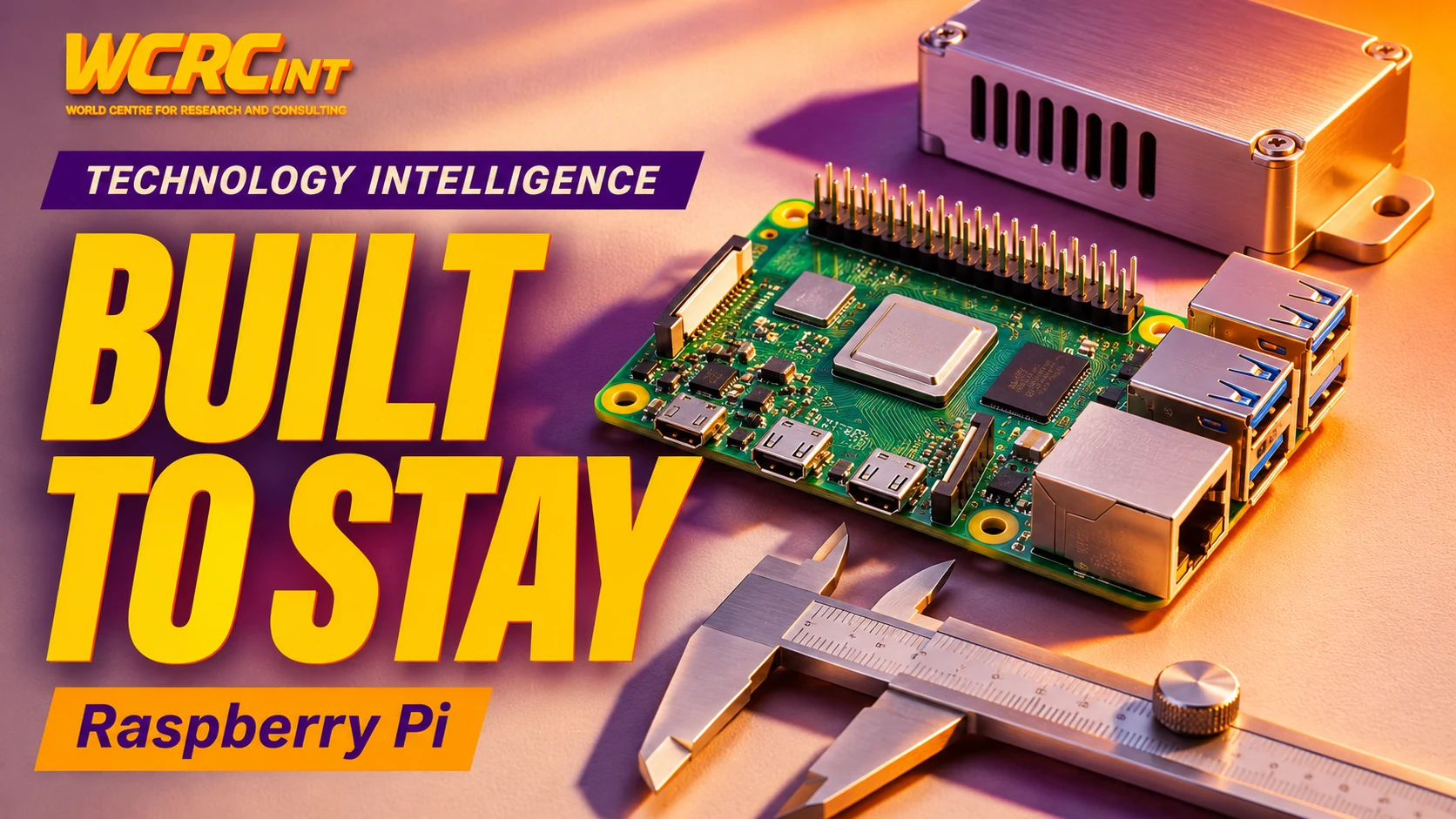
A long product-availability commitment can help an equipment maker plan around an embedded component. It does not guarantee supply at every moment, fix the price or establish how long a complete customer product will remain supported.
Raspberry Pi appears at No. 39 in WCRC's UK's Most Powerful 100 Brands 2026, with a published score of 65.96. The UK-only score is provisional pending validation under that edition's methodology. It is a brand-ranking record, not a technical reliability certificate or a forecast of the company's financial results.
The company's 17 September 2025 longevity article explains its approach to extended manufacturing lifetimes. That is a dated company statement, not a new announcement today. Product-specific dates should be checked against the current documentation when a purchase or design commitment is made.
A component choice becomes a product commitment
An illustrative equipment maker using a single-board computer must do more than confirm that a prototype works. It needs a plan for procurement, replacement and software maintenance over the life of the product it sells.
A later component change can require engineering work and renewed testing. The amount depends on the design. This article does not estimate a redesign cost or claim that a particular buyer has avoided one.
A buyer could therefore compare suppliers on the evidence needed to keep a design usable. That evidence includes a product-specific availability statement and a way to hear about changes. A broad assurance that a platform is long-lived is less precise than a commitment attached to the actual component under consideration.
Keep hardware availability and software support separate
The company discusses both manufacturing longevity and continued software support. Those claims answer different questions. A board may still be obtainable while a particular application dependency, operating-system configuration or customer integration needs its own maintenance.
An engineering lead should document that dependency boundary before promising a service life to customers. Who supplies updates? Who checks compatibility? What happens if a security requirement changes? A component supplier cannot answer every question about the assembled product.
Procurement also needs a contingency. Availability over a stated period is not an assurance that a distributor will have every quantity on a particular day. The relevant agreement and local supply arrangements require separate examination.
WCRC Intelligence & Analysis
The Product, Innovation & Delivery lens in the UK Powerful Brands methodology helps examine whether a technology promise is usable by the customer making a long-term decision. The analysis does not derive a new technical score from the existing brand result.
For an industrial buyer, a practical acceptance document would name the component, the source and date of the availability statement, the software owner and the response to a change notice. Review it at design approval and when important dependencies change.
That document would be a more defensible basis for planning than a general expectation that a popular board will remain easy to buy. The commercial value of longevity depends on whether the customer can build a maintainable product around it.