
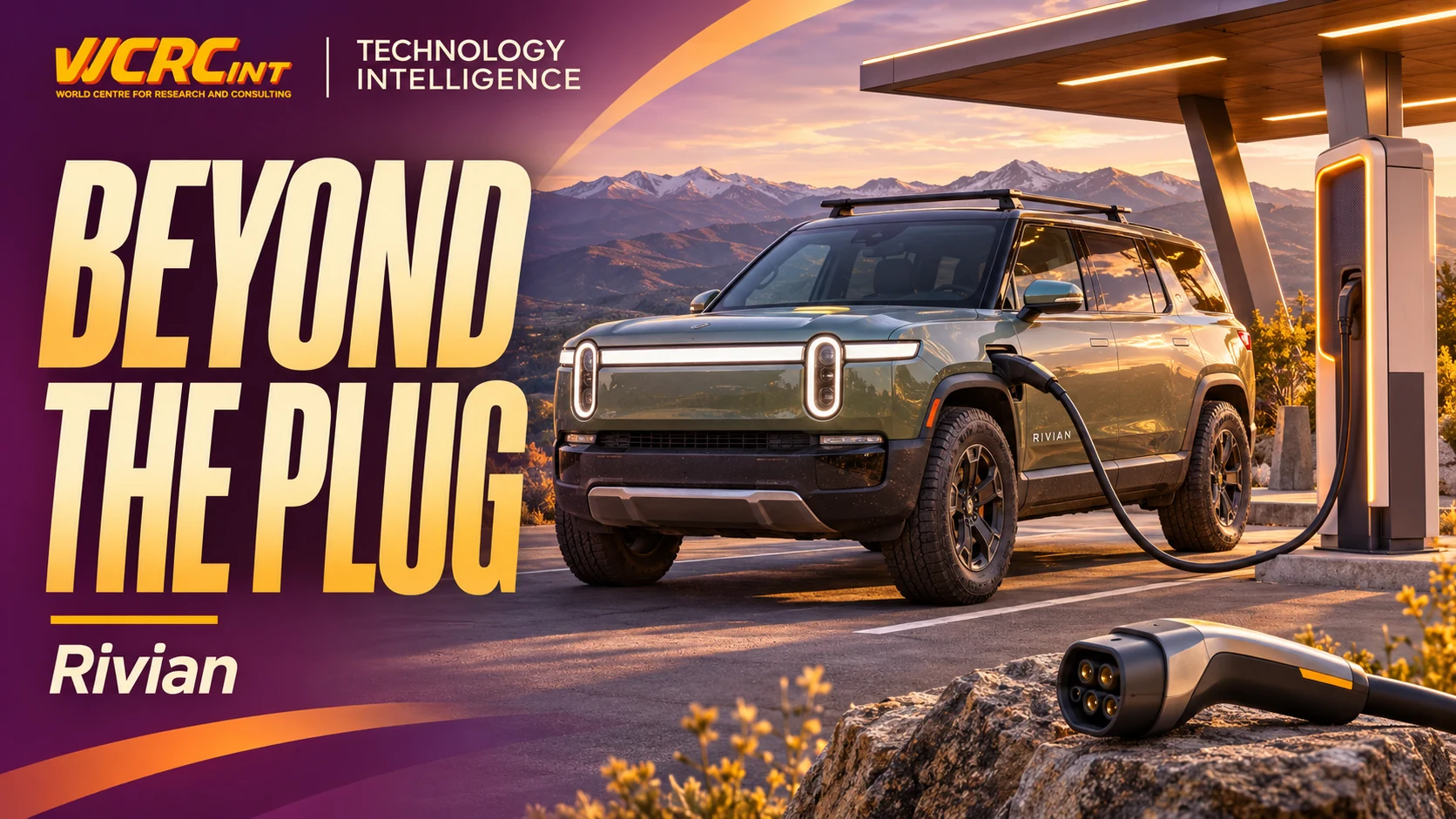
A useful charging promise tells a driver which sites work with their vehicle and what they need to use them. A large network total is less informative if it combines connectors, locations and vehicle requirements the driver cannot distinguish.
Rivian ranks No. 21 in America's Most Trusted D2C Brands 2026, with a provisional published Trust Score of 79.60, subject to revision under the edition's methodology. This is a result within that edition's cohort. It does not measure the reliability of each charger or establish the experience of every vehicle owner.
Rivian's R2 charging explainer, dated 23 September 2026, discusses finding chargers, route planning and connector types. Tesla's support page for other EVs independently confirms that access depends on the vehicle and site. Both are primary operational explanations; neither is an independent audit of network uptime.
Describe the journey for the vehicle in question
A driver needs an answer tied to their model and route. The connector fitted to the vehicle, any compatible adapter and the site's access arrangements can all affect that answer. Current vehicle guidance should take precedence over an old general announcement.
Tesla distinguishes categories of Supercharger access and directs users to check compatibility through its tools. The existence of an agreement with an automaker should therefore not be paraphrased as permission to use every charging post.
This article does not supply a universal adapter recommendation or charging instructions. Drivers should use the current official guidance for their specific vehicle and site.
Network information is part of the product
For a customer, the journey includes finding a suitable stop and understanding what happens when the intended one is unavailable. Product teams can examine that journey without assuming that a larger map necessarily creates a better experience.
An illustrative acceptance exercise would ask a user to plan an unfamiliar trip with their exact vehicle details. Can they identify a compatible stop and understand the information being shown? Can they find the official next step if the stop cannot be used?
That is a proposed usability test. WCRC has not driven the route, measured charging speed or tested a Rivian charging session for this article. Claims about an observed journey would require that reporting.
WCRC Intelligence & Analysis
The Consumer Trust lens in the Trusted D2C edition provides an analytical reference for the relationship between a product promise and information a customer can act on. It does not convert the brand's ranking into a charger-level performance score.
A charging-experience lead could review how site compatibility is presented across the vehicle, app and customer-support material. Record mismatches and test whether users can resolve them before travelling. Keep ports, sites and locations distinct whenever publishing network totals.
The commercial question is how clearly the brand manages the parts of ownership that depend on a wider ecosystem. Access can expand the driver's options. Trust depends in part on explaining those options accurately enough to use.