
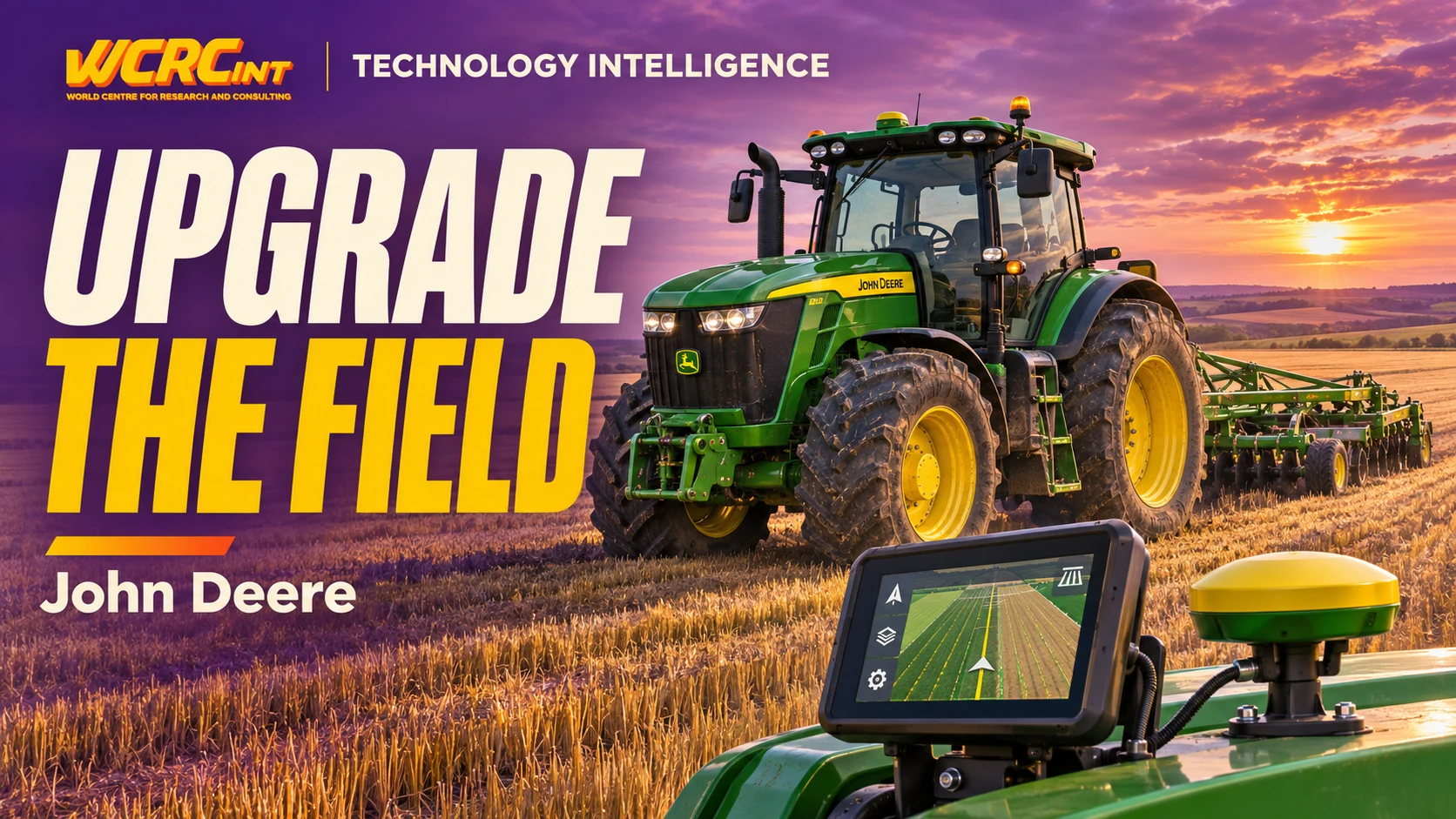
A precision-farming upgrade can be evaluated separately from buying a new machine. The relevant question is whether the intended technology works with the existing equipment and produces a useful operating improvement at an acceptable total cost.
John Deere ranks No. 26 in America's Most Powerful 100 Brands 2026, with a WCRC Power Score of 74.86. That is the American edition's published brand result. It is not a farm-return estimate, an equipment recommendation or proof of the performance of a particular technology package.
The company's Precision Essentials page describes a package of display, receiver and connectivity hardware, alongside renewable software options. It also discusses use with older equipment and mixed fleets. Compatibility and regional terms still require checking for the actual machine and operation.
Lower the entry point, then examine the commitment
Retrofitting changes the purchase conversation. A farmer may be able to consider a technology addition while retaining an otherwise usable machine. That creates a different decision from replacing the entire asset.
It also creates a need to separate hardware ownership from access to particular software features. The company's page sets out different licence arrangements. This article does not quote a price or suggest that one regional package applies everywhere.
The buyer should obtain a complete proposal for installation and the intended functions. A headline hardware price may not describe all the work and recurring commitments involved. Coverage and connectivity need their own check where a feature depends on them.
Choose an outcome that the farm can observe
An illustrative pilot could focus on a defined task in one operation, with records that allow a meaningful comparison. The team would document the equipment, conditions and measurement method before interpreting a difference.
Weather, field characteristics and operating choices can change results. A technology brochure cannot establish the effect on a particular farm. Nor can a brand ranking turn an untested expectation into a measured return.
Operator capability is part of the implementation. A display that can expose useful information still needs someone able to configure it and act on it. The pilot should therefore record the effort needed to use the equipment reliably, not only the apparent ease of its first demonstration.
WCRC Intelligence & Analysis
The Product, Innovation & Delivery lens in WCRC's Powerful Brands framework helps examine adoption as a delivered capability. It directs attention to the customer's existing assets and the conditions under which the new feature is useful. This is model-based interpretation, not a fresh assessment of John Deere.
A farm business manager could ask for a machine-specific compatibility check and a written account of recurring access. Then define a bounded pilot with a review point. Include installation, staff time and support when evaluating the commitment.
The wider industrial lesson concerns the route by which technology reaches an installed base. A supplier can offer innovation through upgrades as well as new equipment. The strength of that proposition depends on the customer's ability to use it and judge the result.