In brief. Batra Henlay Cables (BHC) is a wire and cable manufacturer founded in 1992 in Badarpur, New Delhi, by promoter Rajesh Batra. It makes building, power and solar cables at its plant in Greater Noida, earns about 90 percent of sales in India and the rest in Nepal, Bhutan and the Maldives, supplied the Central Vista redevelopment including the new Parliament building, and has set a target for 80 percent of its product range to be eco-friendly by 2028. Its distinguishing operating practice is a treasury-style approach to copper: forecasting, in-house annealing, diversified sourcing, forex planning and hedging with futures and options.
Key facts: Batra Henlay Cables
| Legal/brand name | Batra Henlay Cables (BHC) |
| Founded | 1992, Badarpur, New Delhi |
| Promoter | Rajesh Batra, cable manufacturing since the early 1990s |
| Head office | New Friends Colony, New Delhi 110065 |
| Manufacturing | Ecotech 1, Greater Noida, Uttar Pradesh |
| Employees | More than 500 |
| Markets | India (about 90% of sales), Nepal, Bhutan, Maldives |
| Flagship products since 2023 | Halogen-free wires; fire-resistant LV/MV power cables; UV-coated XL-LSZH cables for solar |
| Certifications | BIS (Category 1 status, per company); ISO 14001; ISO 45001 |
| Landmark supply | Central Vista, New Delhi, incl. new Parliament building |
| ESG target | Eco-friendly range from 20% to 80% of product mix by 2028; Plan 2030 circular economy |
| WCRC recognition | World's Leading Brands 2025 (WCRC Leaders) |
What does Batra Henlay Cables manufacture?
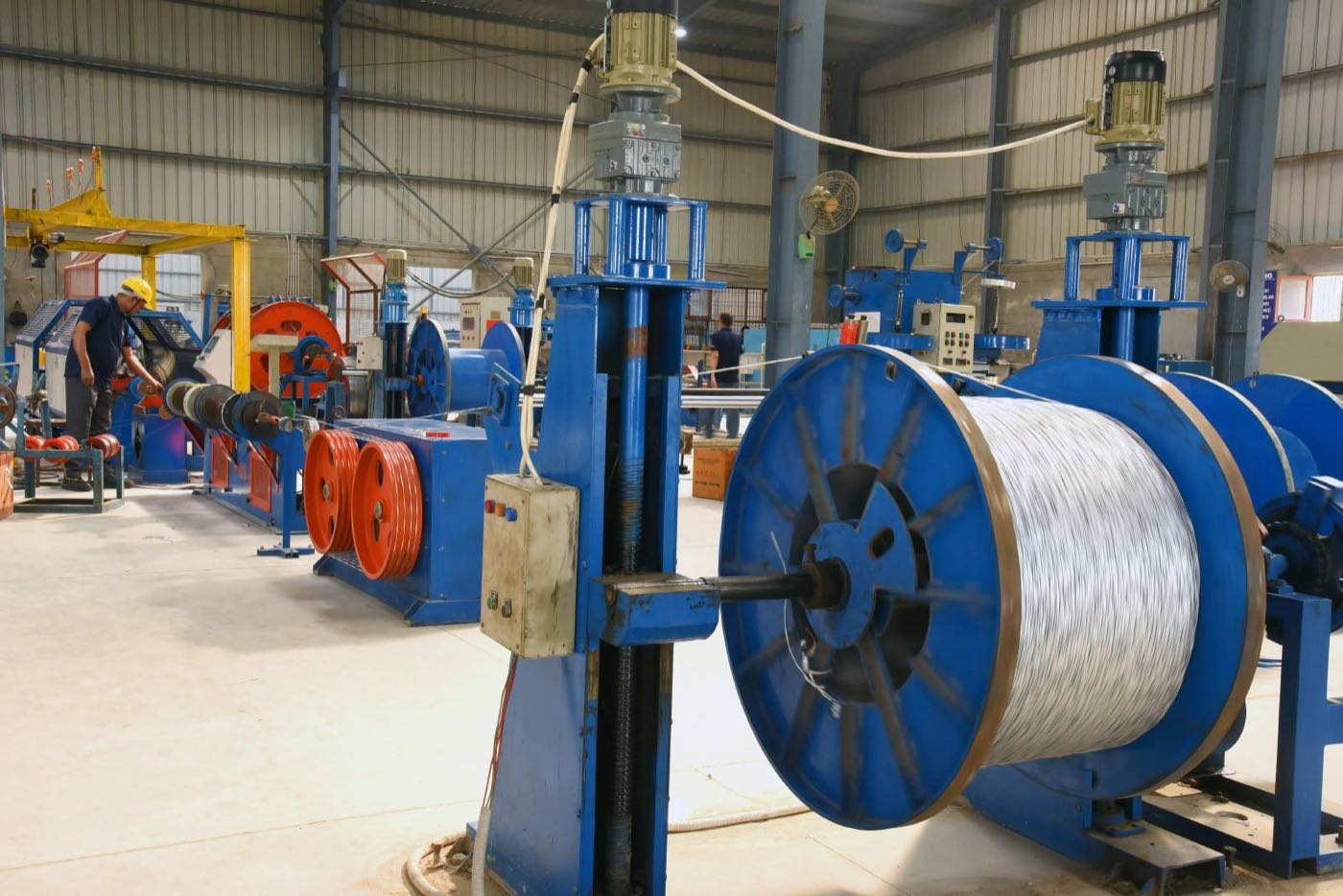
Batra Henlay Cables makes wires and cables whose end uses, by the company's own account, run across infrastructure, real estate, data centres, IT parks, renewable energy and power electrification, defence, educational institutions and healthcare establishments. The core range is conventional insulated building and power cable. Since 2023 the company has added three flagship lines developed with international and local technology partners at what it describes as a double-digit million-dollar investment:
- Halogen-free wires, for installations where smoke toxicity in a fire is the governing risk.
- Fire-resistant cables up to and including low- and mid-voltage power cables, designed to keep a circuit live under flame.
- Cross-linked low-smoke zero-halogen (XL-LSZH) cables with a UV coating for outdoor storage and use, aimed at solar installations where peak temperatures exceed 50°C.
The company states that these products are patented, certified and licensed under the Bureau of Indian Standards framework, and that it holds Category 1 status with the relevant local and central government bodies. It reports endorsement from Chief Fire Officers and senior electrical officials, and adoption of the new range by architects, mass transit operators, central public sector undertakings, roads and buildings departments, infrastructure construction agencies, government construction wings, the renewable energy sector, regional development authorities, grid users and urban planning bodies. It has not disclosed a market adoption rate in numbers.
Where does Batra Henlay Cables sell?
About 90 percent of Batra Henlay Cables' sales are in India. The remaining 10 percent comes from three neighbouring markets, each with a distinct customer profile:
| Market | Share of sales | Typical end use (company-stated) |
|---|---|---|
| India | ~90% | Infrastructure, real estate, data centres, IT parks, renewable energy, power electrification, defence, education, healthcare |
| Nepal | ~10% combined | Hospitality and tourism projects |
| Bhutan | Hospitality and tourism projects | |
| Maldives | Judiciary and government construction |
Regional supplies in India ship with bilingual documentation, covering material test reports, safety guidelines and technical specifications, in recognition of the country's 22 scheduled languages. For the north-eastern states, where supply areas include tribal and ecologically sensitive zones, the company uses biodegradable packaging.
How has Batra Henlay Cables grown since 2020?
The company's growth over the past five years tracks three successive waves of Indian construction demand. It did not change its product category to follow them; it positioned supply capacity ahead of each.
| Period | Demand driver | Batra Henlay Cables' response |
|---|---|---|
| 2020–21 | Pandemic-driven expansion of hospitals, medical universities, care centres, clinics, specialised treatment institutions and pharma facilities | Pitched to the healthcare sector during its overhaul; supplied wires and cables to new and upcoming medical projects |
| 2021–22 | W-shaped recovery; "Vocal for Local"; central government construction pipeline including the Central Vista Master Plan and new Parliament building | Supplied the Central Vista project; the company identifies this as the turning point in its brand standing |
| 2023 onward | Shortfall in travel infrastructure for 1.5 billion people: mass transit, airports, railways, roads | Supplied the renovation and expansion programme; EPC contractors and utilities began securing supply with advances backed by bank guarantees |
How does Batra Henlay Cables manage copper price risk?
Cable making is a commodity-driven business and copper is the backbone of the cost. Batra Henlay Cables treats copper exposure as a finance function rather than a purchasing task. The components the company describes are:
- Forecasting and stock planning for copper, with real-time oversight of the drawing units.
- Backward integration: annealing of copper rod in-house, supported by consolidated statistical calculations.
- Diversified supply chain for timely arrival of treated copper from more than one source.
- Forex purchase planning ahead of imports, run on a set formula.
- Financial instruments: options, futures and hedging, used so that quotations can be honoured for their validity period.
Case: the post-Covid copper spike
The company cites the London Metal Exchange copper price after Covid as its test case. When demand rebounded, many mines were still operating under Covid protocols with reduced workforces and could not meet the surge. Prices rallied beyond expectations and became volatile enough to attract speculation, while the dollar, the pound and copper moved in accelerating and inverse relationships over short and long periods. This put price-point pressure on the company's ongoing order supplies at the intermediate stage. Its response was to bring options, futures and hedging into a systematic process, so that it could issue quotations with a defined time validity and hold them.
What are Batra Henlay Cables' sustainability targets?
The headline target is a reversal of the product mix. Today, the company states, eco-friendly products are 20 percent of sales and traditional insulation-based cable is 80 percent. By 2028 it intends 80 percent of the organisation's product to be eco-friendly, across all sizes up to 630 sq mm. The company is explicit that this depends on a cost-volume-profit analysis now under way between its supply chain and technical teams, to develop economical, lighter insulations on REACH and RoHS formulations.
Circular-economy practices in place
- Waste vendors developed to reuse empty reels and end-of-life products and components.
- PVC recycled into boards used as sample boards and product display bases for marketing.
- Scrap shaped locally at site by partner vendors to reduce transport movements and shipments.
- Operator training against copper and aluminium scrap-reduction and space-management targets.
- Plastic spools made reusable with partners.
Plan 2030 and compliance
Batra Henlay Cables is registered under Extended Producer Responsibility and is working to a Plan 2030 for a circular economy. Adoption, it notes, has to stay within BIS and IEC regulations on thermoplastics and fillers so that products remain fully recyclable under e-waste management norms. It is developing modular design through in-house testing and NABL-accredited third-party testing to enable partial material recovery from mica tapes, cross-linked sheaths and similar components. Under ISO 14001 the extrusion process recirculates and reuses cooling water, minimises chemical release and monitors discharge against local sewage department requirements.
How does Batra Henlay Cables use AI in manufacturing?
The company's digital programme is built around the physical causes of cable failure: insulation thickness, uniformity, surface precision, coaxiality and centring. An inconsistency at any of these points becomes a hot spot under load and a possible short circuit. Its systems, as described:
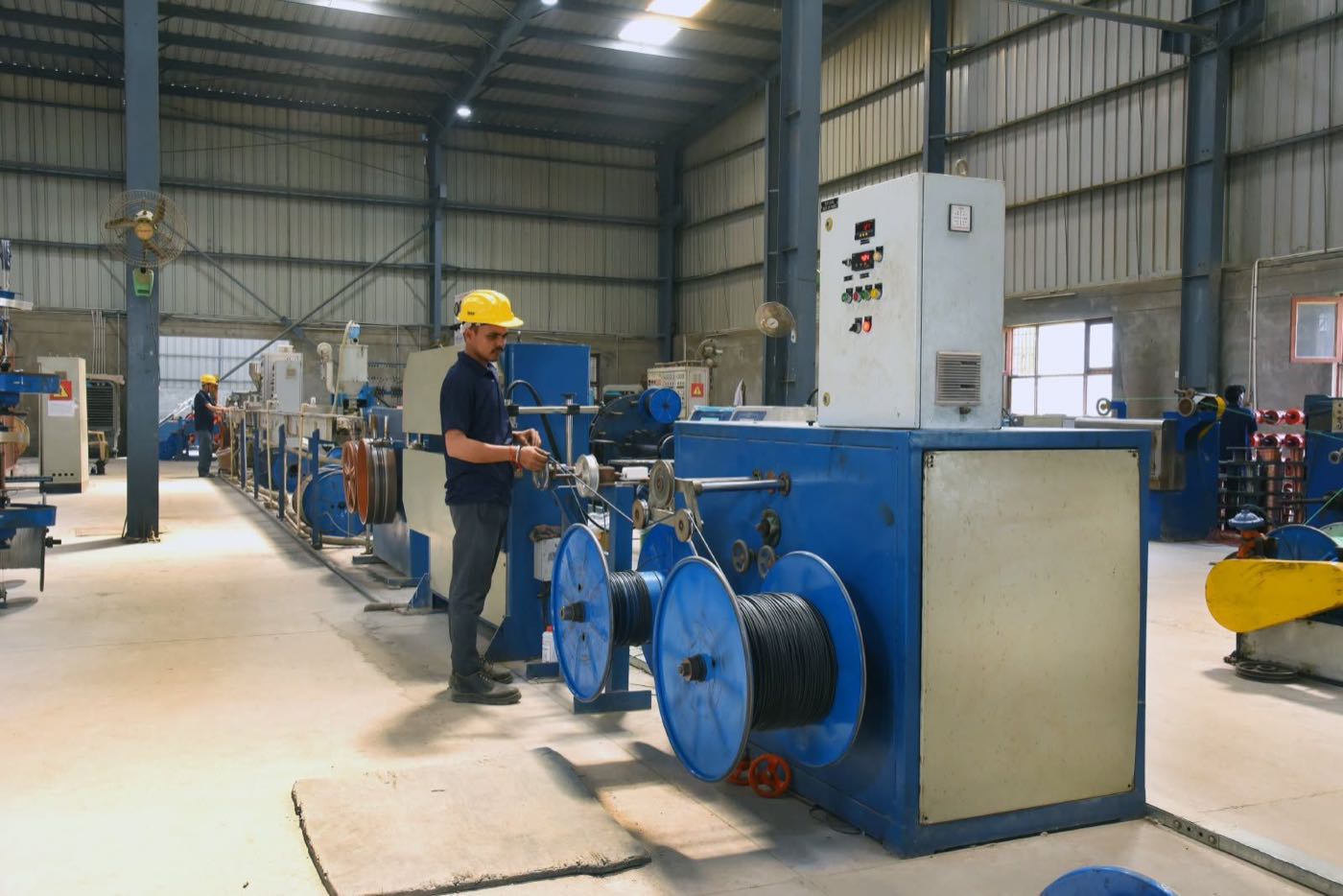
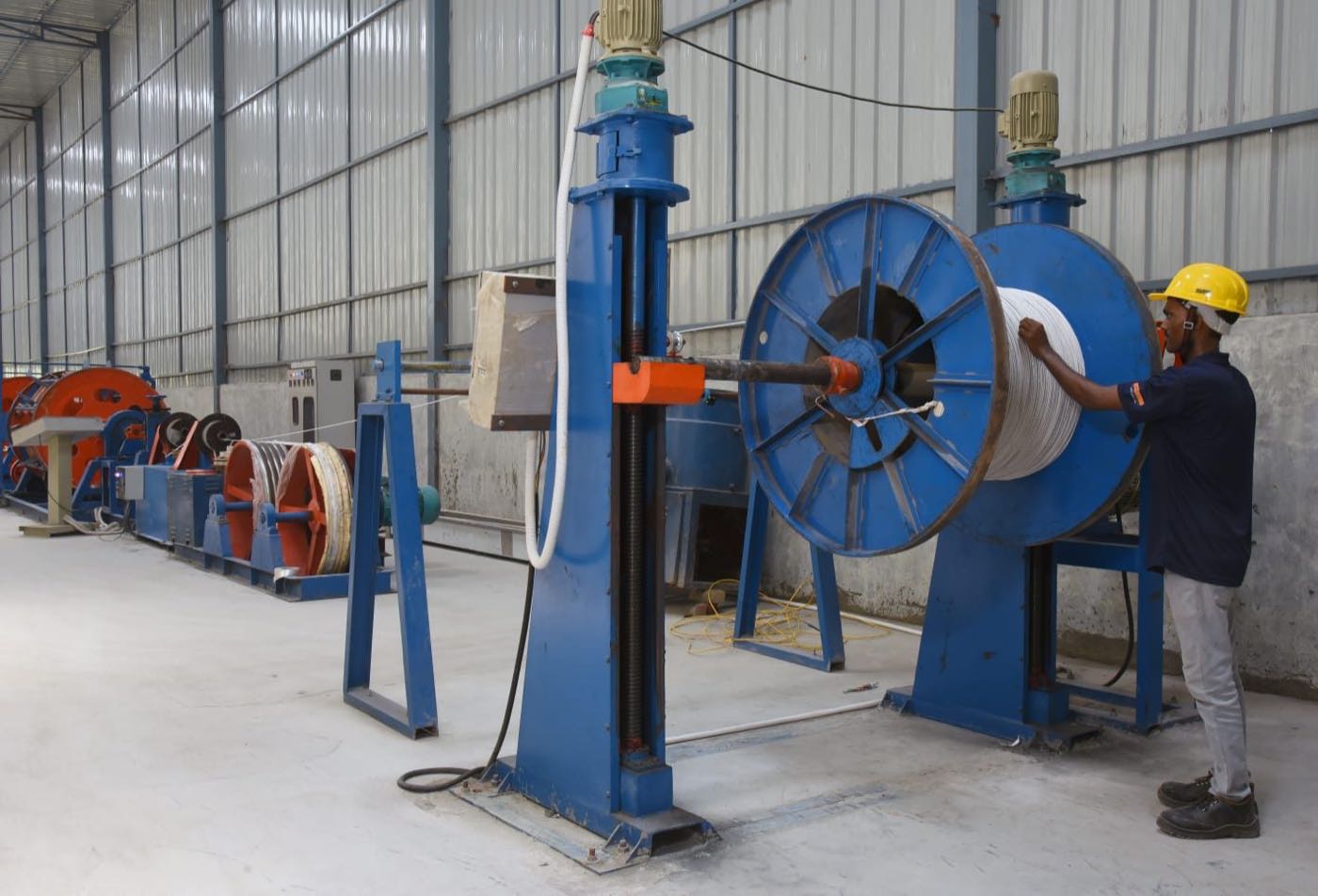
- AI-enabled laser printing on extrusion lines that marks the cable in real time, measures for uniformity, updates a central server with machine speed and extrusion intensity, and gives a production quantity by shift end.
- Predictive maintenance: the same systems flag printing faults in advance and pre-determine likely future faults, raising maintenance requirements before breakdowns.
- Robotic stacking: AI-automated rotators stack packed bundles once a preset metre count is reached.
- AI-enabled pneumatic controllers that monitor compressor behaviour and regulate air pressure to the machines, which the company credits with quality control, efficiency and indirect emission control.
- Fault detection in cable laying, pinpointing underlying issues for timely correction.
The company reports the gains as reduced wastage, higher output, longer product life and longer machine life. It has not published quantified efficiency figures such as cost reduction or customer experience scores.
How does Batra Henlay Cables engage its market on safety?
Because humidity and heat in Asian buildings keep electrical systems under stress, the company maps active construction zones and runs micro events, electricians' meets, at community centres in sensitive locations, with its local distribution partners. Its safety engineers and regional sales and marketing staff bring facility managers and electricians together on the gaps in ageing building electrical systems, particularly at peak summer load. Content covers flame-retardant products, upgrading life-safety systems to fire-resistant cabling under the National Building Code, case histories of building fires, and the case for IoT monitoring devices in buildings with mass public movement, even where this raises cost.
Who leads Batra Henlay Cables and how is it governed?
The promoter, Rajesh Batra, has been in cable manufacturing since the early 1990s. The C-suite comprises a chief executive, chief financial officer and chief operating officer from different cultural and professional backgrounds. Governance commitments the company has placed on record:
- Gender-balanced recruitment with mechanisms to monitor the growth of the hierarchy pipeline beneath the C-suite.
- Annual training hours to rise from 20 to over 30 for all employees across a workforce of more than 500.
- Executive incentives tied to targets, assessed on the likelihood and severity of associated risks over a defined time frame, covering ethical practice, occupational health and safety, and decarbonisation.
- Safety management under ISO 45001 with a zero-tolerance approach; environmental governance under ISO 14001 with annual reviews.
Leadership frames the market in grid terms: a national generation target of 900 GW and a Central Electricity Authority projection of peak demand at 366 GW against about 243 GW today. Since 2023, regular EPC contractors and utilities have been placing orders with secured advances and bank guarantees to lock in supply, which the company says has streamlined cash inflows and supported organic growth; it intends to direct these funds toward a more diverse portfolio and emerging markets needing current technology at lower prices.
WCRC assessment
Based on the company's submission and the public record checked against it.
Strengths on record
- A documented copper risk-management model that most mid-sized Indian cable makers do not operate.
- Supply credentials on nationally visible projects: Central Vista, pandemic-era healthcare, transit.
- BIS-certified fire-safety product range with stated adoption across government and infrastructure buyers.
- A dated, numerical ESG target (20% to 80% by 2028) with the cost constraint named.
- Customer prepayment behaviour (advances with bank guarantees) indicating supply reliability.
Points to watch
- R&D investment is given only as "double-digit million dollars"; no per-product split.
- Market adoption rates for the three flagship lines are not quantified.
- Digital efficiency gains are described qualitatively; no cost, scrap or uptime figures.
- Patent status is stated by the company; filings not independently cited in the submission.
- Board diversity is described at C-suite level; no board composition data.

Powerfacts
What does Batra Henlay Cables manufacture?
Batra Henlay Cables manufactures wires and cables for infrastructure, real estate, data centres, IT parks, renewable energy, power electrification, defence, education and healthcare. Its three flagship lines launched since 2023 are halogen-free wires, fire-resistant cables up to low and mid voltage, and UV-coated cross-linked low-smoke zero-halogen cables for solar use, all certified under the Bureau of Indian Standards.
Where is Batra Henlay Cables located and who runs it?
Batra Henlay Cables was founded in 1992 in Badarpur, New Delhi, by promoter Rajesh Batra and his brothers. The head office is in New Friends Colony, New Delhi, and the manufacturing plant is at Ecotech 1, Greater Noida, Uttar Pradesh. The company employs more than 500 people.
Which projects has Batra Henlay Cables supplied?
Batra Henlay Cables supplied the Central Vista redevelopment in New Delhi including the new Parliament building, hospitals and medical institutions built during the 2020 to 2021 pandemic expansion, and mass transit, airport, railway and road projects from 2023 onward. Outside India it supplies hospitality and tourism projects in Nepal and Bhutan and judiciary and government construction in the Maldives.
What is Batra Henlay Cables' sustainability target?
Batra Henlay Cables states that eco-friendly products are currently 20 percent of sales and conventional insulation-based cable 80 percent. It targets reversing this to 80 percent eco-friendly by 2028 across sizes up to 630 sq mm, with a Plan 2030 for a circular economy under Extended Producer Responsibility, and operates under ISO 14001 and ISO 45001.
Methodology and sources
This brief is compiled from the WCRC Brand Coverage submission made by Batra Henlay Cables (Sections A to C: Brand Fundamentals, Cultural and Ethical Impact, Innovation and Future Readiness). Figures are the company's own statements and are marked as such. Founding year, locations and promoter name were checked against the company website, batrahenlay.com. WCRC publishes only excerpts approved by the brand.
Related reading: the World’s Leading Brands 2025 feature on Batra Henlay Cables.