Know yourself
Clear self-knowledge of values, motives and limits is the centre from which every other kind of influence grows.
In practice: The leader spends a few minutes each day asking who they are beneath their role and mood.
WCRC-GLC-24 — The Modern Sages
The WCRC Self-Initiation Model
Know yourself first; influence follows without any title.
THE MODEL
A model of leadership that starts from self-knowledge and self-directed growth, and widens into influence without formal authority. The leader initiates their own learning, keeps purpose in every task, earns influence sideways and upward, and welcomes many paths to the same goal.
Anchor teaching: Know yourself, and that is knowing God
This is a selection of teachers linked with the Hindu tradition, not a ranking. The models offer management reflection, not religious instruction.
WCRC is not affiliated with or endorsed by any teacher or organisation discussed.
MODEL STRUCTURE
Clear self-knowledge of values, motives and limits is the centre from which every other kind of influence grows.
In practice: The leader spends a few minutes each day asking who they are beneath their role and mood.
Growth does not wait for a programme, a mentor or permission; the leader starts their own learning.
In practice: The leader sets one self-chosen learning goal each quarter and begins it without waiting for approval.
Keeping the larger purpose in mind during ordinary work gives small tasks meaning and steadiness.
In practice: The leader opens each meeting by stating which purpose the meeting serves.
Influence earned by clarity and example flows sideways to peers and upward to seniors, as it did with her husband.
In practice: The leader looks for ways to help peers and seniors succeed without claiming authority over them.
Different people reach the same goal by different routes; a leader who insists on one way loses many good people.
In practice: The leader asks teams for alternative approaches before fixing a method.
TEACHING AND CONTEXT
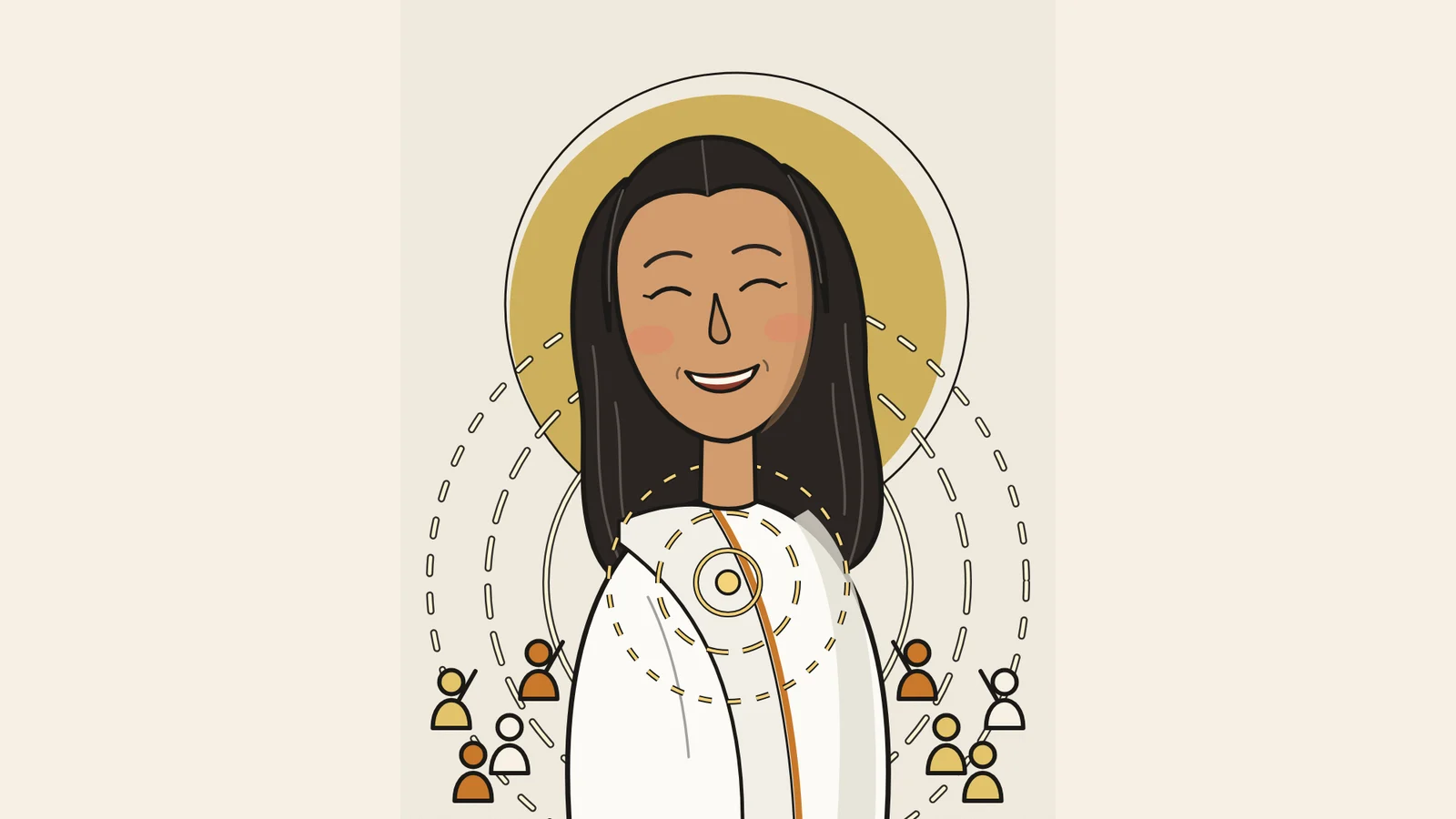
On Jhulan Purnima, 3 August 1922, at Bajitpur, Nirmala Sundari performed her own initiation with no outer guru; devotees recount that she later said God Himself, in the role of guru, revealed the name to her. She held no office and no title. Devotees recount that her husband Bholanath, after years of watching her sadhana, received initiation from her and became her first disciple. Her influence grew from inner clarity, sideways and upward, before any institution existed.
"Know yourself, and that is knowing God." Self-knowledge and God-knowledge are the same search.
Shree Shree Anandamayee Sangha, Ma's Life (English translation as published by Shree Shree Anandamayee Sangha)All paths lead to the same goal: she welcomed people of every faith and practice and did not ask anyone to change religion.
Shree Shree Anandamayee SanghaRemembrance of God at all times: keep God's name and presence in mind through the day, in work and rest alike.
Matri Vani, via anandamayi-ma.com (page to be checked)Oneness behind all forms: behind every name and form there is only the One.
World Religions and Spirituality Project (Orianne Aymard)OPERATING MODEL
BENEFIT MODEL
The leader gains influence that does not depend on position, and a steady centre that survives changes in role.
People are encouraged to start their own growth and are recognised for the influence they earn as well as the titles they hold.
Customers meet staff who take initiative and keep purpose in mind, even in routine interactions.
Investors back an organisation with leadership spread well beyond the org chart and less key-person risk.
A workplace that welcomes many paths and starts from self-knowledge helps people of every background find their place.
WCRC MODEL PARAMETERS
The scores describe this model's emphasis on each parameter. They are not scores for a person or organisation.
Vision Quotient3 / 5
Impact Index2 / 5
Innovation Score5 / 5
People Leadership5 / 5
Stakeholder Trust4 / 5
Resilience Factor3 / 5
Global Mindset3 / 5
THE AI AGE
Self-directed learning and influence without hierarchy are the defining traits of AI-era talent. The WEF expects 39% of existing skill sets to be transformed or become outdated over 2025-2030 [4]; no training calendar can keep pace, so people must initiate their own learning. Self-determination theory names autonomy, competence and relatedness as the needs that drive self-motivation [1], and Hong and Page show that under certain conditions diverse problem solvers outperform a group of the best individuals [2]. Anandamayi Ma's example joins all three: start from within, act without waiting for title, and welcome many paths.
EXECUTION
Start your next leadership meeting by saying which purpose it serves, and name the learning goal you have chosen for yourself this quarter.
See how much learning people already start themselves and whether they can link their work to purpose.
Deliverable: Baselines for self-initiated learning and purpose clarity, and the CEO's own learning goal made public.
Gate: Baseline recorded for self-initiated learning, purpose clarity and approach diversity, and the CEO has stated a personal learning goal to the team.
Show in one team that self-chosen learning, purpose-led meetings and openness to many approaches change how the team works.
Deliverable: A pilot record of learning goals started, meeting purpose lines, alternatives recorded and peer nominations.
Gate: Every pilot team member has a learning goal in progress, every kick-off records alternatives with a clear decision, and peer nominations have begun.
Build self-initiation and influence without title into the company's routines without weakening accountability.
Deliverable: Updated check-in, meeting and kick-off templates and a peer recognition system in use across teams.
Gate: All teams use the new templates, and recognised contributions without title each have a clear accountable owner.
Keep the habit of starting from within alive while making sure many paths still end in decisions.
Deliverable: An annual report on the four KPIs by team, with examples of decisions taken after several approaches.
Gate: The leadership team has reviewed decision quality alongside approach diversity within the year, and purpose clarity is tracked every quarter.
sponsor: The CEO, who has to model a self-chosen learning goal and help peers and seniors succeed without claiming authority.
lead: The CHRO, who runs the learning check-ins, peer recognition and template changes.
forum: Progress is reviewed quarterly in the leadership meeting, with team-level results shared with managers.
decision_rights: The CHRO can change check-in and meeting templates and run recognition alone; any change to formal roles or decision authority goes to the CEO.
Daily: A few minutes of private self-check on values and motives beneath role and mood.
Weekly: Every meeting opens with a line stating which purpose it serves.
Monthly: Leaders find one way to help a peer or senior succeed without claiming authority over them.
Quarterly: Each person reviews their self-chosen learning goal and sets the next one; peer and upward nominations are recognised.
Annually: Leadership checks whether openness to many paths still ends in clear decisions and shared standards.
The founder shares a personal learning goal and opens the daily stand-up with its purpose. Alternatives are discussed openly before each build decision, and influence comes from whoever has the clearest view.
HR adds learning goals to quarterly check-ins and introduces peer recognition for influence without title. Managers are trained to welcome alternative approaches and then decide firmly.
Self-initiated learning and purpose clarity are reported to the executive team by business unit. The board asks how the company identifies people who lead without title and how it keeps accountability clear.
MEASUREMENT AND LIMITS
Share of employees with a self-chosen learning goal in progress, from the learning platform or quarterly check-ins.
Count of peer- and upward-nominated contributions recognised each quarter, from a peer recognition system.
Share of project kick-offs that record at least two alternative approaches before choosing one.
Pulse survey item asking whether people can link their daily tasks to the organisation's purpose.
RESEARCH SOURCES
The WCRC Guru Management Codex and its 27 models are proprietary WCRC models. © WCRC. All rights reserved.