
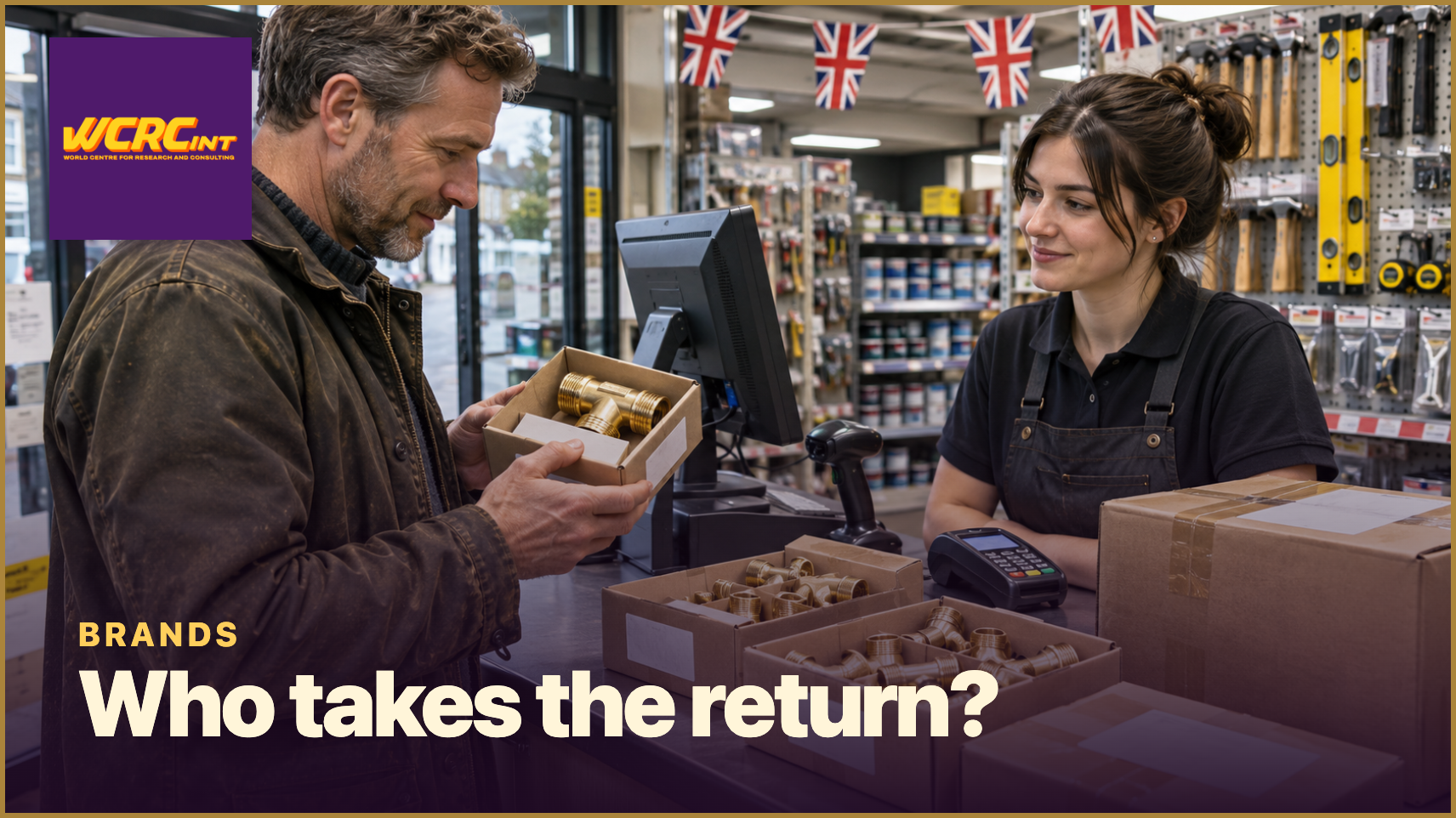
A B&Q confirmation email can cover products bought from B&Q and products bought from a marketplace seller. For a return, the name against the individual item matters. B&Q’s verified seller guidance directs customers to deal with the seller through their order details. Anyone preparing a DIY job with items from several sellers should check that route before paying, along with which parcels will arrive separately and whether each item is eligible for a store return.
Consider an illustrative basket for fitting a shelf. A shopper picks a bracket supplied by B&Q and a set of fittings from a seller on its marketplace. The two products satisfy the same need. They may have separate delivery estimates, parcels and return instructions. If the fittings don’t match, the practical question is where the purchaser can take them or send them back. That question matters even if the return itself is straightforward. A person who has already arranged help for Saturday may be more interested in when a replacement will arrive than in how the two products are counted in a retailer’s sales report.
What Kingfisher reported
On 24 November, Kingfisher reported that B&Q’s total sales including marketplace gross merchandise sales rose 1.4% in the quarter ended 31 October 2026. B&Q like-for-like sales fell 1.0%. The UK trade association BHETA also reported the like-for-like decline and covered the company’s online sales growth. Gross marketplace sales reflect what was sold through the marketplace. They should be read as the measure Kingfisher actually reports, with the scope and qualifications in its statement. Taking the difference between the two percentages would give a misleading calculation of how much the marketplace contributed because the measures use different bases.
WCRC’s UK Powerful Brands 2026 retail table places B&Q 83rd in the overall edition, with a provisional Power Score of 62.48. The edition assesses the brand and puts it in context among its UK peers. Turning to the Product, Innovation & Delivery lens, the next question is what happens when a retailer extends its catalogue using outside sellers. Wider choice has practical value when someone can identify who will deliver, who can approve a return and what they should do if the two parcels arrive in the wrong order for the job.
What the customer can establish
B&Q’s help material distinguishes verified seller products from items sold by B&Q. The route for a verified seller query starts with the order and the seller contact process. A buyer can look for the seller name before payment and record which delivery details apply to each line. General returns guidance is useful, especially for understanding how store and online processes work. As the purchase becomes more specific, the relevant information is the guidance attached to the item and its seller. B&Q says that eligible verified seller products under 30 kg and under one metre can be returned in store. Its FAQ describes a 90-day verified seller returns window. A return involving damage, a faulty product or a change of mind can require different information. Check the applicable instructions before travelling to a store.
Suppose the bracket arrives on Friday and the fittings are due the following Tuesday. The shopper could use the bracket on Saturday if they already have suitable fittings. If the fittings are essential to that bracket, the usable date for the job is Tuesday at the earliest. The item-level estimates may both have been communicated properly and the basket may still be a poor fit for the job. Showing the latest expected arrival among interdependent items would help someone decide whether to make that purchase now. The example illustrates a choice at checkout and represents no tested B&Q order.
The same problem reappears in reverse if a customer has to send both products back. There might be one confirmation email that identifies two parties. The most important part of the confirmation is the persistent link from each item to its seller and its own instructions. It should be easy to find when the customer is looking at a phone in the car park. A support line that can explain the distinction eventually may solve the issue. A clear order page could let the customer choose the right route before making the trip.
How the marketplace could test the experience
A marketplace director could start with a small set of common projects. Recruit shoppers who have bought hardware online and a separate group who rarely do. Ask each to build a basket around a real project requirement using a public catalogue and stop before payment. Introduce one return question for an item sold by B&Q and the same question for a verified seller item. Record the first place each participant looks. Capture which seller they identify, whether they can distinguish the estimated delivery windows and whether they pick the correct first point of contact. Test on mobile as well as desktop.
The business should also check the instructions customers see after payment. With access to genuine orders and permission to analyse them, compare whether the seller that appeared before checkout is named in the same way on the confirmation and the self-service return page. A listing that clearly names a seller can still result in an ambiguous confirmation. A naming change may be harder for a customer to interpret than a small shift in the page layout. Check the journey in ordinary language before judging it from an internal seller identification number.
There is a plausible explanation for support contacts that has nothing to do with seller disclosure. Customers may understand the arrangement and still contact B&Q because they trust the brand to help when another seller is slow to respond. The retailer could distinguish misrouting from an escalation prompted by a delay. The first calls for better instructions. The second asks whether the marketplace’s escalation promise matches the service its sellers can deliver. A comparison needs case reasons and timestamps, not a count of calls alone.
Yesterday’s Screwfix analysis asked whether a shopper can finish a repair after one store visit. That was a question about the range in a small shop. Here the physical job can fail even when every part is available somewhere. The marketplace decision rests on whether the buyer knows who supplies each item and who will help after purchase. The easiest way to find out is to give somebody a real-looking job and see what they can work out from the information already on the screen.