
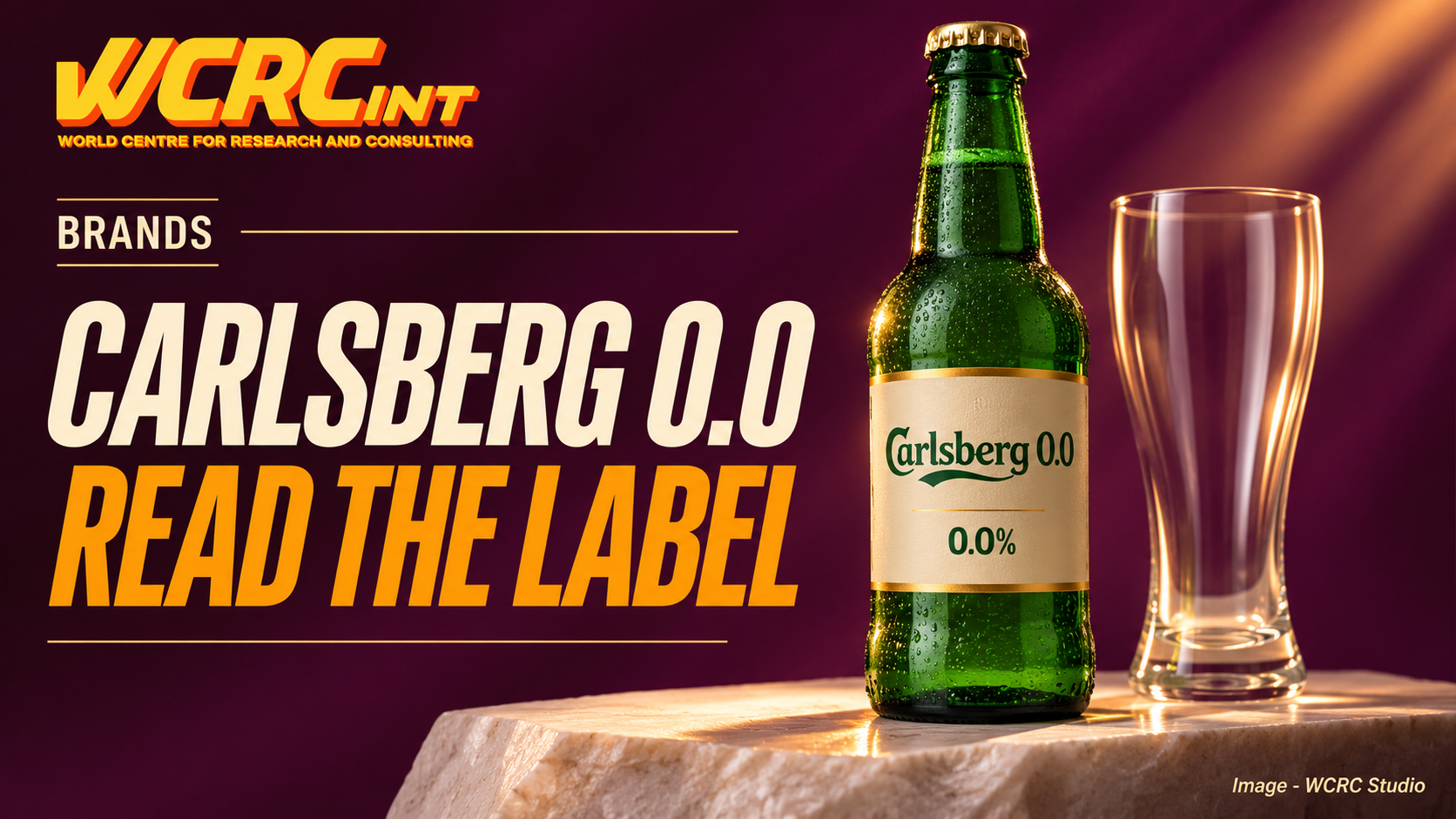
An alcohol-free portfolio description should not be used as a substitute for the stated alcohol content of a particular product. Buyers need the information for the bottle and market they are actually considering.
Carlsberg ranks #57 in WCRC’s Europe’s Most Powerful 100 Brands 2026, with a published Power Score of 69.28. That position concerns the Carlsberg brand within the European cohort. It does not transfer a separate rank or assurance to each product in the group’s portfolio.
The group’s Carlsberg 0.0 product page lists the product at 0% ABV. Its investor FAQ uses a broader definition of alcohol-free brews, referring to fermented products below 0.5% ABV. These statements describe different scopes. The group category should not be read as the specification of every SKU.
Familiarity can make a distinction easier to overlook
A known brand gives a product an immediate point of recognition. That can be useful when the company introduces a different variant or serves another occasion. It also creates a reason to make the difference visible rather than relying on familiarity to explain it.
A retailer may place products near one another, organise them into a category online or shorten their names in a search result. Each presentation needs to retain the product information required for the decision. A shopper should not have to infer a particular bottle’s alcohol content from the parent brand, a colour or the aisle heading.
The same discipline applies to business analysis. A group’s portfolio data and a product specification cannot be used interchangeably. A claim about growth in a category needs its own definition and reporting period. It does not establish that all products in that category share one formulation.
The official pages were read on 23 November 2026. They are not evidence of a new product launch today. Local product labels and market-specific requirements should be checked where the article is used to inform a commercial decision.
WCRC analysis: extend the brand without blurring the offer
Brand Positioning & Recall and Consumer Trust & Sentiment in the European Powerful Brands framework are relevant analytical references. WCRC’s question is how a familiar identity can help customers recognise the brand while the product description gives them enough information to distinguish its offers.
A category manager could test a set of shelf labels or mobile product cards with adult shoppers. Can participants identify the product variant and its stated ABV without opening several unrelated pages? Where they cannot, the team could examine the wording, information hierarchy or selection of pack imagery.
That exercise would measure comprehension. It would not establish a health benefit, a legal classification in every market or suitability for a particular individual. This article makes no recommendation concerning pregnancy, medication, driving or other health and safety decisions.
The brand opportunity is a clearer choice. A customer who recognises Carlsberg should still be able to identify exactly which Carlsberg product is being offered. Preserving that distinction is a practical part of managing an extension under an established name.