
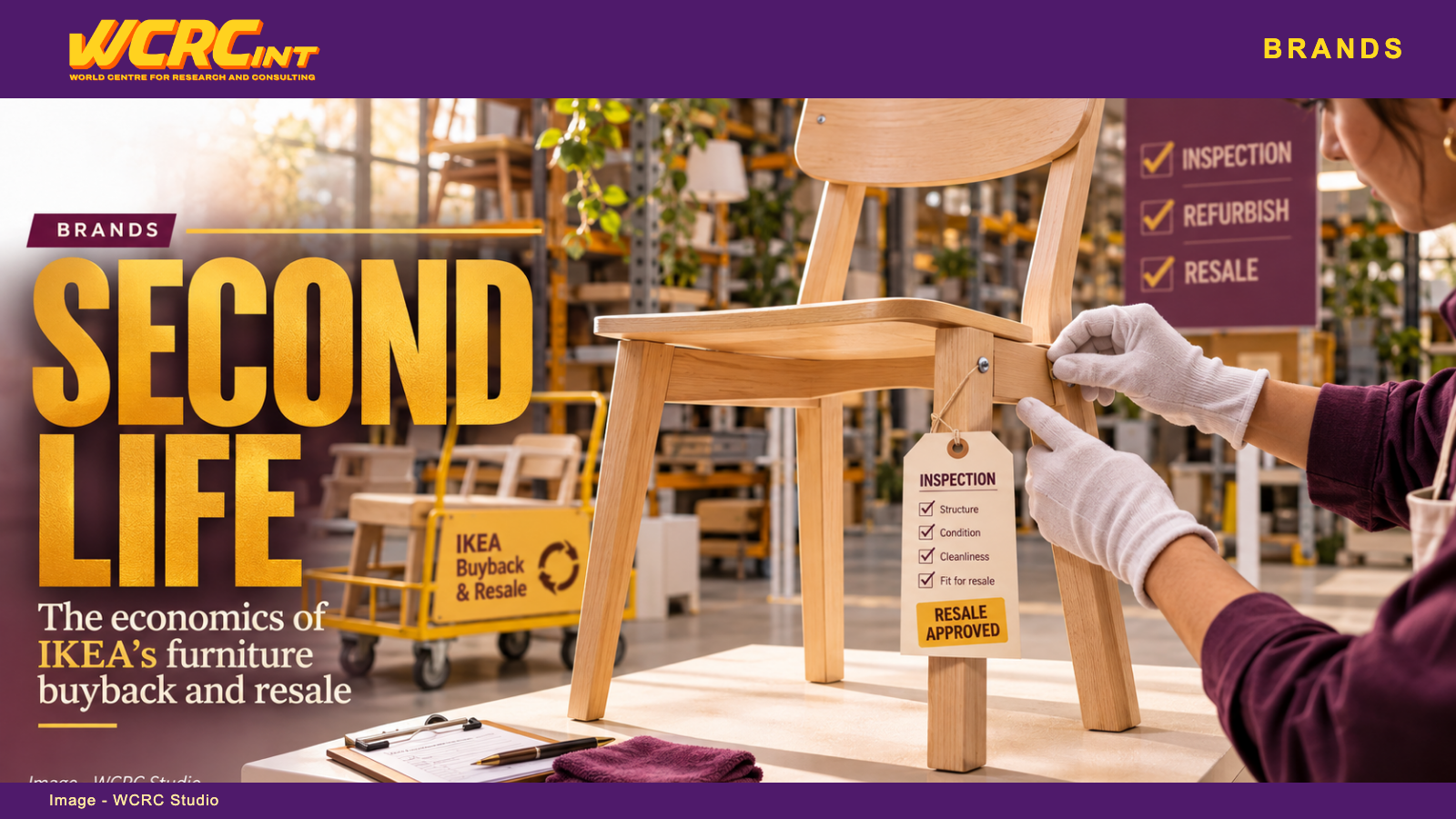
Image - WCRC Studio
Original AI-generated editorial image. The scene illustrates the subject.
Furniture buyback makes commercial sense when the value recovered from an item, including a defensible customer benefit, covers the cost of taking it back and selling it again. IKEA’s US programme shows where a retailer would need to look for that evidence.
IKEA ranks ninth in Europe’s Most Powerful 100 Brands 2026, with a WCRC Power Score of 78.34. That edition assesses brands of European origin. The US service considered here is a market-specific example of a business decision. Its performance is not established by IKEA’s European rank. IKEA ranking profile
The US programme is available at participating locations to eligible IKEA Family and IKEA Business Network members. A customer obtains an estimate, brings fully assembled furniture to a participating store and receives an assessment. The final offer may differ from the estimate, and payment is in store credit. The programme’s terms carry an effective date of 26 October 2022. The current service page was checked for this article on 19 November 2026. Service details · Programme terms
The return trip has a cost
A chair with a second buyer is still an item someone has to inspect, move and display. Its joints may need checking. Its condition must be described accurately. The space it occupies has another possible use.
WCRC’s proposed analysis starts at the individual product group. A retail manager could follow one category from initial estimate to final resale, recording staff time, rejected items, the credit issued and the time the item spends awaiting a buyer. The manager should also record how much effort the customer incurs before knowing the final offer.
An attractive resale price alone would leave several questions unanswered. The store may have spent more on handling than expected. Some returned items may remain unsold. A seemingly efficient programme may also rely on a customer making an inconvenient trip with assembled furniture.
Test the service promise at the counter
The Product, Innovation & Delivery lens in the Europe edition is useful here because it connects an offering with the organisation’s ability to deliver it. For a buyback programme, the practical promise includes a comprehensible estimate and a workable route through the store. Europe methodology
A pilot could begin with products that store teams can inspect consistently and customers can transport reasonably. Management would set the evidence it wants before expansion, including acceptable inspection time and the share of items resold within a defined period.
Credit redemption belongs in that analysis, but managers should avoid treating every later purchase as a sale created by buyback. Some customers would have bought again anyway. Comparing similar customer groups would help distinguish the two.
There is also a limit to the environmental claim. A second sale establishes another transaction. Any estimate of avoided production or emissions would need a separate life-cycle assessment and assumptions about what the buyer would otherwise have purchased.
IKEA’s service makes the operational steps visible. A retailer considering a similar offer can use those steps to test a category before making a wider commitment. The most informative result may be discovering which items are unsuitable for a profitable, convenient second sale.