
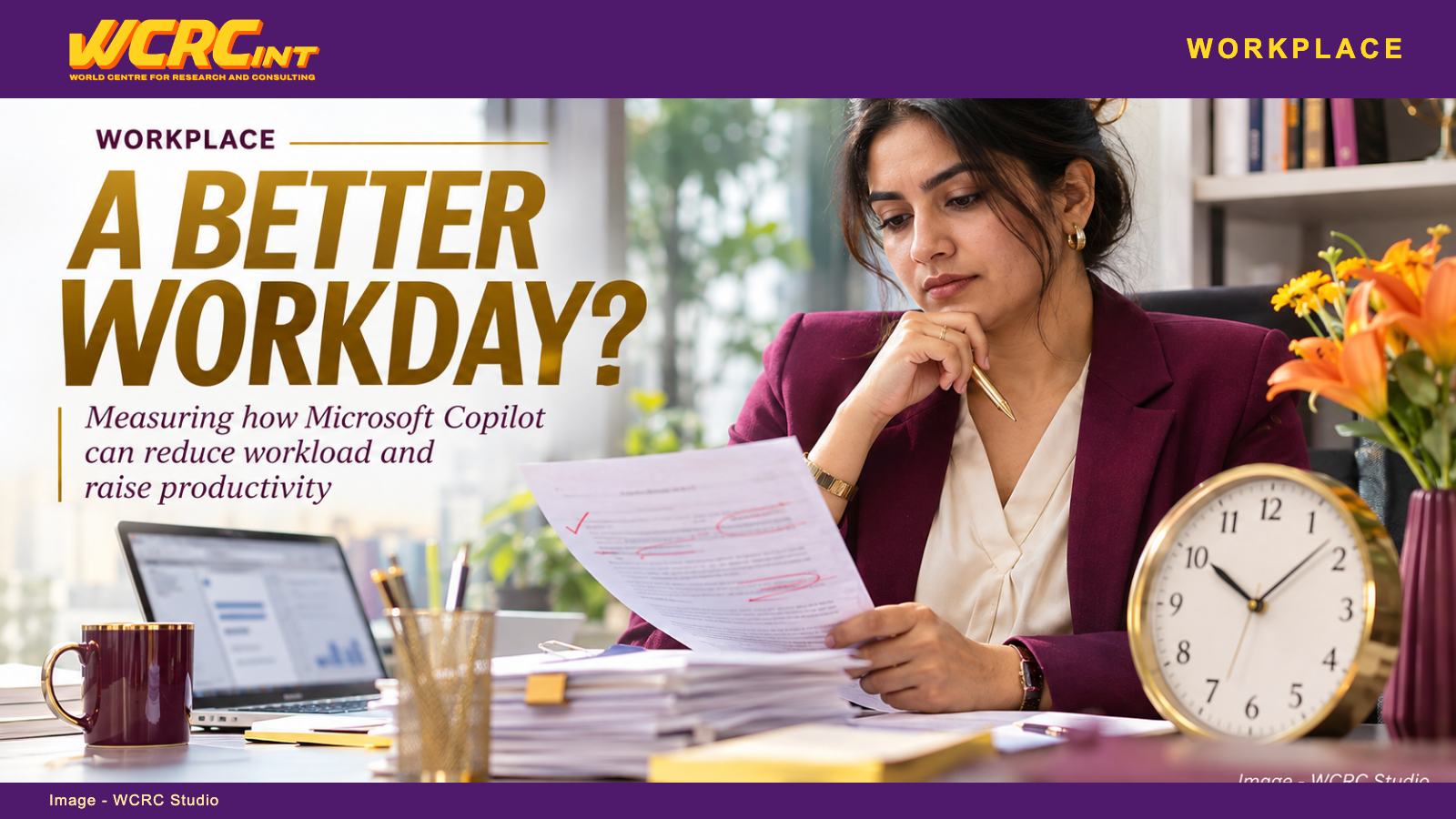
Image - WCRC Studio
Original AI-generated editorial image. The scene illustrates the subject.
A better working day should leave a team producing acceptable work with a manageable amount of effort. A Copilot pilot can test that proposition by following a specific task from assignment through review.
Microsoft ranks seventh in the World’s Most Powerful 100 Brands 2026, Second Global Mega Edition, with a WCRC Power Score of 82.58. This global brand result supplies the company context. It does not establish an employer or workplace assessment for the teams adopting its tools. Microsoft profile
Microsoft’s adoption guidance asks organisations to define the business outcome, the department, the workflow and the metrics. It distinguishes tool usage from evidence of improved business results. That is a useful distinction for a manager deciding whether to expand a pilot. Microsoft guidance
Independent research also argues for attention to the task and the worker. The NBER working paper Generative AI at Work, issued in April 2023, studied an assistant used by customer-support agents and reported differing effects by experience. The setting was customer support, and its results cannot be transferred directly to every Copilot workflow. Research paper
Follow the work beyond the first draft
A team can produce a document faster while spending more time checking it. A reviewer can also become the person who absorbs work displaced from colleagues. A useful pilot needs to follow those transfers.
WCRC’s proposed test would begin with a recurring task, such as preparing a defined internal report. The team would agree what makes the output acceptable and record a baseline before comparing assisted work. It would include the time spent correcting mistakes and answering follow-up questions.
The comparison needs similar tasks and a realistic account of who completed them. A short, familiar report should not be grouped uncritically with an unfamiliar assignment. Managers also need to understand whether workers were given adequate instruction.
Ask staff where the effort went
Culture Crest’s Workplace Value Index includes Performance & Enablement and Capability & Growth. As analytical references, these parameters direct attention to how work gets done and what employees learn. They provide no Culture Crest score for Microsoft or for a customer organisation discussed here. Culture Crest framework
A manager could use brief, voluntary staff feedback to identify work the task timer misses. Did employees feel confident checking the output? Did they need help finding the relevant source? Did the tool allow them to learn the task or leave them dependent on a suggestion they could not explain?
The evidence should be collected with clear privacy protections and a stated purpose. A pilot intended to understand a workflow should give workers enough context to contribute candidly.
Microsoft’s published guidance supports a more specific starting point than a general aspiration to improve productivity. WCRC’s additional argument is that output, review effort and capability should be considered together.
The expansion decision would then rest on the work the team can demonstrate. If a pilot saves drafting time but creates a review bottleneck, management has found a process to repair before buying more licences.