The 27 models

    WCRC-GLC-15 — The Renaissance Masters

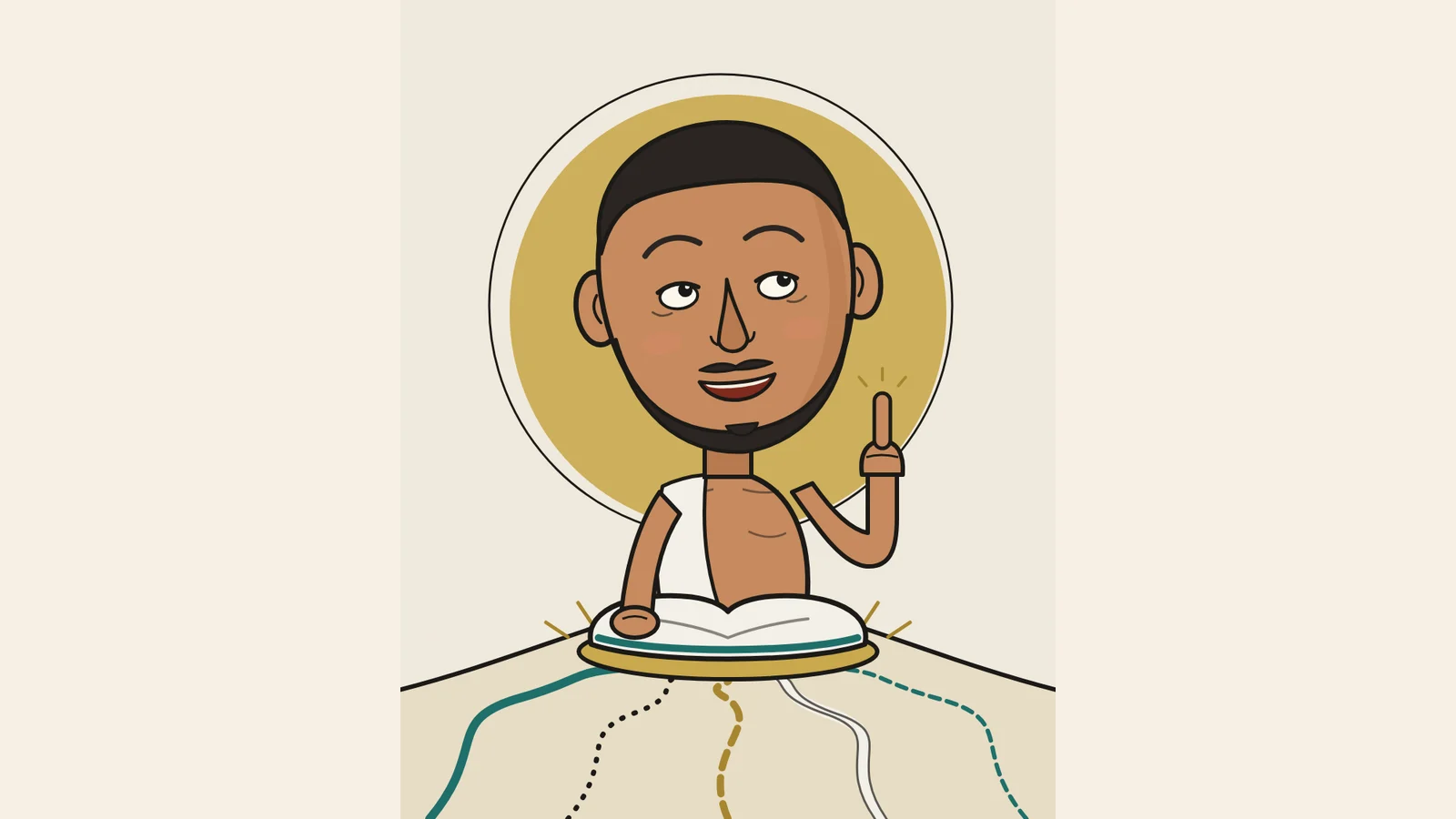
    Sri Ramakrishna Paramahamsa

    The WCRC Many-Paths Model

    One clear summit; respect every path; walk another yourself.

    Sri Ramakrishna Paramahamsa

    THE MODEL

    The WCRC Many-Paths Model

    The Many-Paths Model holds the goal fixed and treats the routes to it as many and legitimate. The leader learns other paths by walking them in person, which turns tolerance into understanding and makes the leader a trusted integrator of different functions, cultures and methods.

    Anchor teaching: Jato mat, tato path (As many faiths, so many paths)

    This is a selection of teachers linked with the Hindu tradition, not a ranking. The models offer management reflection, not religious instruction.

    WCRC is not affiliated with or endorsed by any teacher or organisation discussed.

    MODEL STRUCTURE

    How it works

    One shared summitDifferentfunctionsDifferentculturesDifferentmethodsDifferentgenerations

    One clear summit

    The goal is fixed and shared, so variety in method does not become confusion about purpose.

    In practice: State the organisation's goal in one sentence that every function and region can repeat.
    Many legitimate paths

    Different teams, cultures and methods can reach the same goal; no single route has a monopoly on truth.

    In practice: Let regions and functions choose their own methods once they commit to the shared outcome.

    Walk the other path yourself

    Real understanding of another view comes from practising it, which earns the trust of the people who hold it.

    In practice: The leader spends real working time inside another function or market each year, doing the work.

    Serve beings as the Divine

    Shiva-jnane jiva seva

    Respect for every path rests on respect for every person on it.

    In practice: Treat the people on the least favoured path in the company with the same care as those on the dominant one.

    Joy in the climb

    Diversity of route is a source of delight and learning, not a problem to be managed away.

    In practice: Celebrate cases where a different method reached the shared goal better than the standard one.

    TEACHING AND CONTEXT

    The thinking behind it

    Ramakrishna was a temple priest of Kali at Dakshineswar, trained in Tantra under the Bhairavi Brahmani and in Advaita under Totapuri. From the mid-1860s into the 1870s he went further and practised Islamic and Christian paths himself, and reported reaching the same realisation through each. His teaching "As many faiths, so many paths" came out of walking those paths himself.

    As many faiths, so many paths (Jato mat, tato path): all sincere religions lead to the same God.

    Belur Math, Sri Ramakrishna page

    He practised Islamic and Christian paths himself and reported reaching the same realisation.

    Brief milestones, mid-1860s to 1870s (Belur Math; Britannica)

    Serve beings as God (Shiva-jnane jiva seva): serving creatures as manifestations of God, the ideal that inspired Vivekananda's service work.

    Belur Math

    OPERATING MODEL

    From principle to practice

    Inputs

    • One clearly stated shared goal
    • Teams with different methods and cultures
    • Leaders willing to work in other functions
    • Respect for every person and route

    Practices

    • Freedom of method under a common outcome
    • Leaders rotating through other paths
    • Cross-path reviews of what worked
    • Reverse mentoring across generations

    Outputs

    • Fewer turf wars between functions
    • Leaders trusted by many groups
    • Wider set of tested solutions
    • Faster integration after mergers or expansion

    Outcomes

    • Strong global mindset in leadership
    • Higher trust across divides
    • Better problem-solving from diverse views
    • Cohesive culture without uniformity

    BENEFIT MODEL

    Who it is for

    leader

    Having walked other paths, the leader can integrate rival views with credibility instead of refereeing between them.

    employees

    They can reach the goal in ways that suit their craft and culture without being judged for not following one house method.

    customers

    In different markets they are served in ways that fit them, because local paths are treated as legitimate.

    investors

    The company keeps a single strategic goal while adapting methods, which lowers execution risk across markets.

    society

    A business that respects many paths models harmony across faiths, cultures and generations in a divided time.

    WCRC MODEL PARAMETERS

    Model emphasis

    The scores describe this model's emphasis on each parameter. They are not scores for a person or organisation.

    VisionQuotientImpactIndexInnovationScorePeopleLeadershipStakeholderTrustResilienceFactorGlobalMindset

    Vision Quotient3 / 5

    Impact Index2 / 5

    Innovation Score4 / 5

    People Leadership5 / 5

    Stakeholder Trust4 / 5

    Resilience Factor2 / 5

    Global Mindset5 / 5

    THE AI AGE

    Why it matters now

    Leaders now run teams that span cultures and generations and work alongside many AI tools, each with a different way of reaching an answer. Edelman reports that seventy percent are unwilling or hesitant to trust someone with different values, facts, problem-solving approaches or cultural background, and finds employers best placed to broker trust across divides [1]. In Hong and Page's model a diverse team can outperform a team of the best individual performers because the best tend to think alike [2]. A CEO who has worked inside other paths, human and technical, is better able to combine them toward one goal.

    EXECUTION

    Put the model to work

    Write the organisation's goal in one sentence that every function and region can repeat, and send it to your leadership team for challenge this week.

    Founder and CEO

    • State the summit in one sentence: In the first week, write the shared goal in one plain sentence and test it with people from different functions until all can repeat it. Hold it fixed from then on.
    • Free the methods: Tell each function or region that it may choose its own route once it commits to the shared outcome measures. Intervene only when a route is plainly failing the goal.
    • Walk another path yourself: Spend real working time each year doing the work inside another function, market or generation, not visiting it. A founder can rotate through roles for a few days; a large-company CEO takes a longer stint in a unit far from their own background.
    • Take a reverse mentor: Pair with a junior colleague from a different background and meet every month to learn how they see the work. Act on at least some of what you hear.
    • Celebrate a different route: Each quarter, publicly recognise a case where a non-standard method reached the shared goal better than the house way. Treat people on less favoured paths with the same care as the dominant group.

    Company

    • Map paths and trust gaps (CEO office with CHRO): Record which methods each function and region uses, where turf wars occur, and how trust in leadership differs by function, region and age band. This is the baseline for trust across groups.
    • Pilot freedom of method (Two business heads with a shared goal): Let two units with the same outcome measures use different methods for a set period, and run a joint review of what worked. Have their leaders spend time working in each other's units.
    • Embed cross-path rotation (CHRO): Make time working inside another function or market a requirement for senior promotion, and set up reverse-mentoring pairs for every senior leader. Approve team methods that differ from the house standard when they meet the shared outcome.
    • Train managers as integrators (CHRO and all people managers): Teach managers to hold the shared goal while respecting different routes, and to make the hard call when a path is failing. Use real cross-function disputes as practice cases.
    • Track exposure and trust spread (HR analytics): Report cross-path exposure days, method diversity under one goal, the gap in trust between groups and reverse-mentoring participation every quarter. Look for the trust gap narrowing over time.
    • Scale and guard the summit (CEO and board): Extend freedom of method and rotations across the company once the pilot shows fewer turf wars, and check each year that variety has not cost the organisation its direction. Stop paths that fail the shared goal rather than tolerating them.

    Readiness check

    Before starting

    • Can every function and region state our shared goal in the same words?
    • Have our senior leaders done real work inside a function or market other than their own?
    • Are we willing to stop a method that is plainly failing the goal, even when we respect the people using it?
    Days 0–30

    Phase 1 · Diagnose and commit

    Fix the one clear summit and map the paths and trust gaps that exist today.

    • Write the organisation's goal in one sentence and test it with every function and region until each can repeat it.
    • Map the methods teams actually use to reach that goal, including the ones head office does not favour.
    • Break the trust-in-leadership score down by function, region and age band and record the gap between highest and lowest.
    • Record how many days each senior leader spent working inside another function or market last year.

    Deliverable: The one-sentence summit and a path map showing methods, trust gaps and cross-path exposure.

    Gate: Every function and region can repeat the summit sentence, and a baseline is recorded for every KPI.

    Days 31–90

    Phase 2 · Pilot and prove

    Prove that different routes to a shared goal work when leaders walk each other's paths.

    • Two business heads with the same goal each choose their own method and commit to the same outcome measures.
    • Each head spends real working time inside the other's function, doing the work rather than visiting it.
    • Start reverse-mentoring pairs between each pilot head and a junior colleague from a different group.
    • Celebrate in public any case where the less favoured method reached the goal better than the standard one.

    Deliverable: A pilot comparison of both methods against the shared outcome measures, with a keep, adapt or stop decision for each.

    Gate: Both pilot methods are measured on the same outcomes, both heads have completed working time in the other's area, and a decision is recorded for each method.

    Days 91–180

    Phase 3 · Embed and scale

    Make freedom of method and walking other paths normal for every senior leader.

    • Set up a rotation so every senior leader spends working days each year inside another function, market or generation's work, with a real output.
    • Create a register of approved methods that differ from the house standard but meet the shared outcome measures.
    • Extend reverse mentoring to every senior leader.
    • Train managers as integrators who can hold teams with different methods to one goal, and treat people on the least favoured path with equal care.

    Deliverable: A cross-path rotation programme, a methods register and a trained group of integrator managers.

    Gate: Rotation is scheduled for every senior leader, and the methods register is in use for approving new team methods.

    Month 7 onwards

    Phase 4 · Sustain and renew

    Guard the summit so tolerance of many paths never becomes lack of direction.

    • Review every method in the register once a year against the shared outcome measures.
    • Stop methods that have failed the shared goal across agreed review points, and say why in public.
    • Re-test the summit sentence when strategy changes, keeping it to one sentence.
    • Track the spread of trust across groups and act on the lowest-scoring group first.

    Deliverable: An annual paths review covering exposure, method diversity, trust spread and reverse-mentoring participation.

    Gate: The trust gap between the highest and lowest groups is narrowing or holding, and every registered method has been reviewed against the goal in the year.

    Governance

    sponsor: The CEO, because only the CEO can fix the summit and grant freedom of route to the units below.

    lead: The COO, who sits across functions and regions and runs the methods register and the rotation.

    forum: Quarterly in the leadership meeting, with an annual paths review for the board.

    decision_rights: The lead can approve new methods that commit to the shared outcome measures and schedule rotations; changing the summit or stopping a region's method goes to the sponsor.

    Cadence

    Monthly: Reverse-mentoring pairs meet, and senior leaders bring back one thing they learned from the other path.

    Quarterly: Methods review: each approved method is checked against the shared outcome measures.

    Quarterly: One case where a different route reached the goal well is told to the whole company.

    Annually: Each senior leader completes a working stint inside another function or market, with an output the host team signs off.

    Annually: The summit sentence is re-tested with every function and region.

    By company stage

    startup

    The founder states the goal in one sentence and lets each small team pick its own way there. The founder works a few days in sales, support and engineering each year to understand each path.

    scaleup

    A methods register records which team approaches are approved, and senior leaders rotate into other functions with a real output. Reverse mentoring starts for the leadership team.

    enterprise

    Regions and functions choose their methods within one shared goal, the COO runs the register and rotation, and trust is tracked across groups. The board receives an annual paths review and checks that the summit has not blurred.

    Success looks like

    • Any employee, in any function or region, can state the organisation's goal in the same sentence.
    • Senior leaders can describe the work of another function from having done it.
    • Teams using different methods respect each other, and the gap in trust between groups has narrowed.

    MEASUREMENT AND LIMITS

    What to watch

    Cross-path exposure

    Track the number of days each senior leader spends working inside another function, market or generation's work each year.

    Method diversity under one goal

    Count approved team methods that differ from the house standard yet meet the shared outcome measures.

    Trust across groups

    Break the employee trust-in-leadership score down by function, region and age band and track the gap between highest and lowest.

    Reverse mentoring participation

    Record the share of senior leaders in an active reverse-mentoring pair with a junior colleague.

    Failure modes

    • Many paths with no summit: tolerance of every method becomes a lack of direction.
    • Walking other paths becomes tourism, a short visit for photographs rather than real work.
    • Respect for difference is used to avoid hard calls when one path is plainly failing the shared goal.

    Execution risks

    • Walking other paths turns into tourism, with short visits and photographs.: Rotation days are logged but no host team can name an output. Mitigation: Require each stint to produce a real piece of work signed off by the host team.
    • The dominant path quietly reasserts itself and head office overrides local methods.: The methods register shrinks and regional teams stop proposing alternatives. Mitigation: Require evidence against the shared outcome measures before any method can be overruled.
    • Respect for difference is used to avoid stopping a method that is plainly failing.: A method misses the shared outcome at successive reviews and is still running. Mitigation: Agree a stop rule for each method when it is approved, and apply it.
    • The summit sentence lands differently across languages and regions.: Regions paraphrase the goal in ways that change its meaning. Mitigation: Translate and test the sentence with local teams, keeping the meaning fixed while the words fit the language.