The 27 models

    WCRC-GLC-07 — The Bhakti Saints

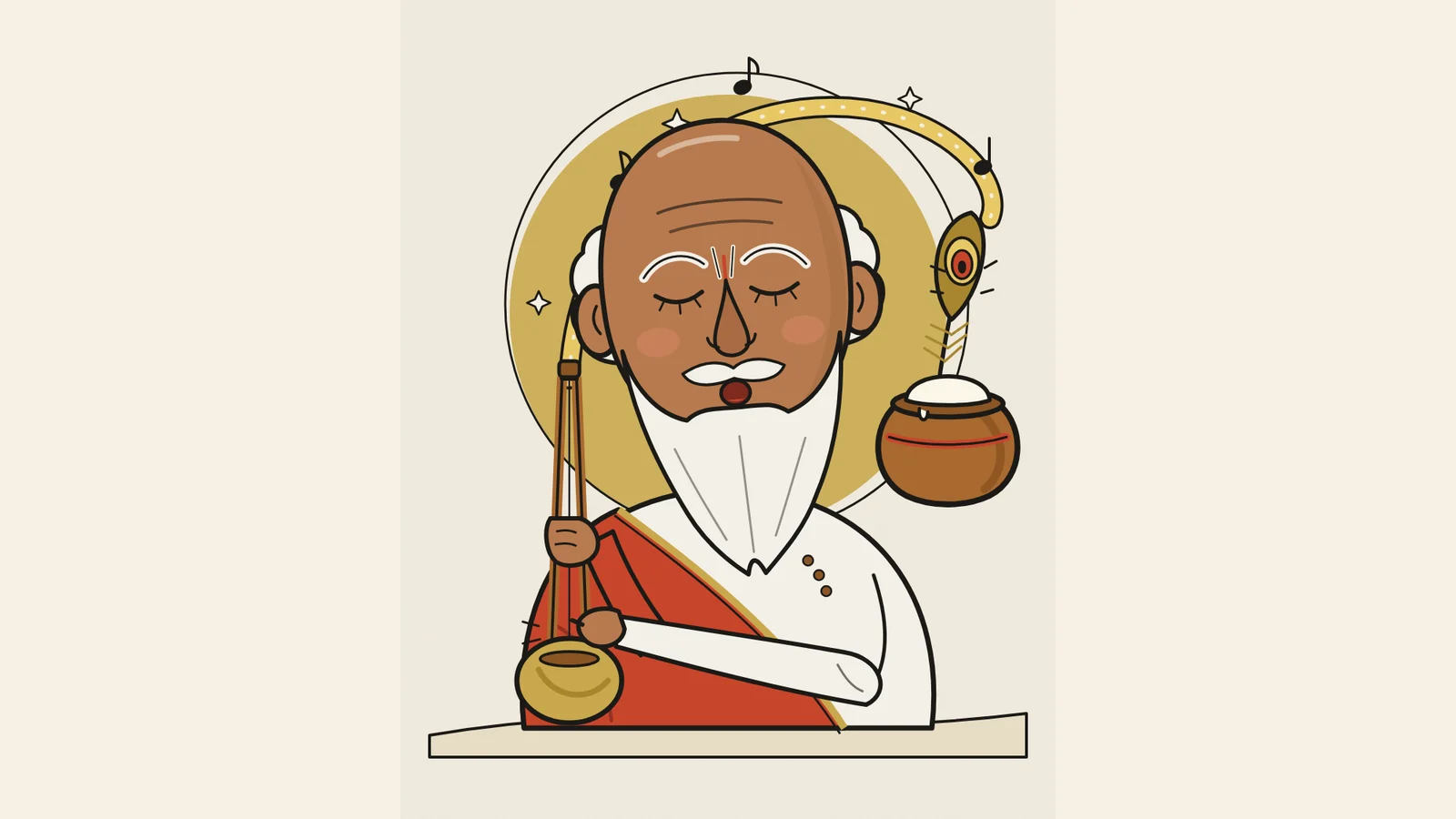
    Sant Surdas

    The WCRC StoryLight Model

    See it inwardly, then tell it as a human story.

    Sant Surdas

    THE MODEL

    The WCRC StoryLight Model

    The StoryLight Model holds that a leader must first see the future clearly within, then give it a concrete human story that others can feel and retell. Abstractions such as strategy statements rarely move people; a lived story told with emotional truth, carried in many voices and kept alive by honest longing for what is not yet achieved, does.

    Anchor teaching: अबिगत गति कछु कहत न आवै (The way of the Unmanifest cannot be told), so Surdas sang the God with form

    This is a selection of teachers linked with the Hindu tradition, not a ranking. The models offer management reflection, not religious instruction.

    WCRC is not affiliated with or endorsed by any teacher or organisation discussed.

    MODEL STRUCTURE

    How it works

    Inner visionHuman storyEmotionaltruthMany voicesLastinglongingStory over timeHold on heartsIllustrative shape, not measured data

    Inner vision

    See the destination clearly yourself before you describe it to anyone. Clarity comes from sustained attention, and more data rarely supplies it.

    In practice: The CEO writes one paragraph on what the company will feel like to a customer in five years before any slide is made.

    The human story

    Lila

    Translate strategy into a concrete scene with people in it, because the abstract cannot be told. People remember who did what, and why it mattered.

    In practice: Every major strategy talk opens with one specific customer or employee scene drawn from the company's own work.

    Emotional truth

    Bhava

    Tell the feeling honestly, including doubt and failure, as Surdas's vinaya poems speak plainly of the poet's own failings.

    In practice: In the same talk as the plan, the leader names one thing that went wrong and what it taught.

    Repetition in many voices

    A story lasts when others retell it in their own words; later singers carried Surdas's songs under the name 'Sur'.

    In practice: Team leaders retell the strategy story to their teams in their own words, and the versions are collected and compared.

    Longing that sustains

    Viraha

    Keep the gap between today and the vision visible, so that what is still missing draws people forward.

    In practice: Each quarter the CEO restates what has not yet been achieved and why it is still worth reaching.

    TEACHING AND CONTEXT

    The thinking behind it

    Devotees recount that Vallabhacharya heard Surdas singing at Gau Ghat on the Yamuna and told him to sing the glory of Krishna's divine play; according to Vallabha tradition, Surdas then went to Govardhan to sing before Shrinathji. Scholars doubt the meeting, but the outcome is on record: a 1582 manuscript holds 239 of his poems, and by the 19th century nearly 10,000 poems carried his name as later singers sang as 'Sur'. The story he sang grew far beyond the singer.

    The Unmanifest cannot be told: formless God is beyond words, like the taste of sweet fruit to one who cannot speak, so Surdas sings the God with form.

    Sursagar tradition, अबिगत गति कछु कहत न आवै (Times Now Hindi, as given in brief)

    Sing Krishna's lila: devotion grows by singing the stories of Krishna's play in Braj; Vallabha tradition says this was his guru's charge to him.

    Vraj Dwar; Hinduism Today (as given in brief)

    Love in separation (viraha): in the bhramargit the gopis turn away Udho's dry philosophy for living love.

    J. S. Hawley, Sur's Ocean (as given in brief)

    God as a child to love: padas such as 'Mother, I did not eat the butter' see Krishna through ordinary, tender family scenes.

    Sursagar tradition, मैया मोरी मैं नहिं माखन खायो (Times Now Hindi; Kaavyaalaya, as given in brief)

    OPERATING MODEL

    From principle to practice

    Inputs

    • Leader's clear inner picture of the future
    • Real scenes from customers and staff
    • Honest record of setbacks

    Practices

    • Open strategy talks with a human scene
    • Name failures alongside the plan
    • Have teams retell the story themselves
    • Restate the unmet goal each quarter

    Outputs

    • Strategy staff can explain accurately
    • Shared language across teams
    • Messages owned by middle managers

    Outcomes

    • Faster alignment on direction
    • Higher discretionary effort
    • A brand story customers repeat
    • Culture that outlives the founder

    BENEFIT MODEL

    Who it is for

    leader

    The leader's intent travels further without having to be in every room, because people carry the story for them.

    employees

    Staff understand why their work matters in plain human terms and can explain it to others with confidence.

    customers

    Customers meet a company whose message is consistent and recognisably human, which makes it easier to believe.

    investors

    Investors hear one coherent story from leadership, managers and the market, which lowers the risk of a hidden strategy gap.

    society

    Public communication rests on true stories told with care, which adds to trust in business rather than eroding it.

    WCRC MODEL PARAMETERS

    Model emphasis

    The scores describe this model's emphasis on each parameter. They are not scores for a person or organisation.

    VisionQuotientImpactIndexInnovationScorePeopleLeadershipStakeholderTrustResilienceFactorGlobalMindset

    Vision Quotient5 / 5

    Impact Index3 / 5

    Innovation Score2 / 5

    People Leadership5 / 5

    Stakeholder Trust4 / 5

    Resilience Factor3 / 5

    Global Mindset2 / 5

    THE AI AGE

    Why it matters now

    Generative AI is now used in at least one business function at 70% of organisations [2], so text, decks and video can be produced in unlimited volume at almost no cost. Volume no longer signals care. What still moves people is a true story with a person at its centre: Paul Zak reports that character-driven stories consistently cause oxytocin synthesis, a neurochemical associated with trust and cooperation [1]. A founder who has seen the future inwardly and can tell it as a lived story will be heard above the generated noise.

    EXECUTION

    Put the model to work

    On Monday, write one paragraph on what the company will feel like to a customer in five years, before anyone makes a slide.

    Founder and CEO

    • Write the inner vision: In the first week, write one paragraph describing what the company will feel like to a customer in five years, without slides or data. Rework it until you can say it from memory.
    • Collect real human scenes: Gather specific scenes from the company's own customers and employees that show the vision at work. Founders can draw on their early customers; CEOs of large firms should ask business heads for them.
    • Open talks with a scene: Open every major strategy talk with one real customer or employee scene, and in the same talk name one thing that went wrong and what it taught. Keep the story true, because a story without an inner vision behind it is spin.
    • Listen to the retellings: Each quarter, read or hear how team leaders retell the strategy story in their own words. Note where the meaning has drifted or hardened into slogan.
    • Restate the unmet goal: Each quarter, restate what has not yet been achieved and why it is still worth reaching. Mark progress too, so longing draws people forward and does not exhaust them.

    Company

    • Test strategy recall (Internal communications with HR): Run a pulse survey asking staff to state the strategy in their own words, and review recent leadership communications for how many open with a real person or scene. This sets the baseline.
    • Pilot retelling in one unit (One business head): Have managers in one unit retell the strategy story to their teams in their own words for a quarter, then collect and compare the versions. Check them for accuracy against the leadership version.
    • Build the story into rituals (CEO office and internal communications): Make a human scene and an honest setback standard parts of every strategy talk, and schedule team-level retellings each quarter. Keep an honest record of setbacks for leaders to draw on.
    • Train managers to retell (CHRO): Train all people managers to tell the strategy story with a real scene, honest feeling and their own words, without reciting slogans. Include how to name a failure without blame.
    • Measure story reach (Internal communications): Track strategy recall in own words, team-level retellings, human-scene ratio and the purpose and clarity score, and report them every quarter. Look for answers that are accurate but copied word for word.
    • Scale the story outward (CEO and marketing head): Once staff can explain the strategy accurately, extend the story to customers and partners, and review each year whether the inner vision behind it still holds. Refresh the vision before the story goes stale.

    Readiness check

    Before starting

    • Can the CEO describe the company's future in a paragraph without slides?
    • Are we willing to name our failures in the same talk as our plans?
    • Will we accept managers' retellings of the strategy that differ in wording from ours?
    Days 0–30

    Phase 1 · Diagnose and commit

    Write the inner vision and find out how the current story lands.

    • The CEO writes one paragraph on what the company will feel like to a customer in five years, before any slide is made (Inner vision).
    • Test strategy recall in people's own words across levels.
    • Count the human scenes against abstract statements in recent leadership talks to set the human-scene ratio.
    • Collect true customer and employee scenes from the company's own work and check each with the people in it (Lila).

    Deliverable: The inner-vision paragraph and a verified bank of human scenes.

    Gate: Baseline recorded for every KPI, every scene in the bank verified with the people in it, and one business head agreed to pilot retelling.

    Days 31–90

    Phase 2 · Pilot and prove

    Prove that a story told with emotional truth and retold by team leaders is remembered and understood.

    • The CEO's strategy talk opens with a human scene and names one thing that went wrong and what it taught (Bhava).
    • Team leaders in the pilot unit retell the strategy story to their teams in their own words (Repetition in many voices).
    • Collect the retellings and compare them with the inner vision for meaning.
    • Confirm that every scene used is true and that the people in it have agreed to its use.

    Deliverable: A collected set of retellings compared against the inner vision.

    Gate: Recall in own words has improved in the pilot unit, retellings differ in wording but keep the meaning, and no scene used has been found untrue.

    Days 91–180

    Phase 3 · Embed and scale

    Build the story into company rituals and train managers to retell it.

    • Open results talks, onboarding and town halls with the story and a fresh human scene.
    • Train managers to retell the story and add true scenes from their own teams.
    • Collect retellings from every team each quarter.
    • Work with the marketing head so the external story matches the internal one.

    Deliverable: A storytelling calendar across company rituals and a retelling library.

    Gate: Every team leader has retold the story with their version collected, and the human-scene ratio in leadership talks has risen against baseline.

    Month 7 onwards

    Phase 4 · Sustain and renew

    Keep the longing alive without slogans or exhaustion.

    • Each quarter the CEO restates what has not yet been achieved and why it is still worth reaching (Viraha).
    • Retire phrases that people now recite without meaning.
    • Refresh the scene bank with new true scenes from every region.
    • Mark what has been achieved alongside what remains, so longing draws people forward.

    Deliverable: A quarterly restatement of the unfinished goal and a refreshed scene bank.

    Gate: Purpose and clarity scores hold or rise, and retellings still show people's own words, not copied slogans.

    Governance

    sponsor: The CEO, because the inner vision has to be the leader's own before anyone else can retell it.

    lead: The head of internal communications, with the marketing head for the external story.

    forum: Quarterly in the leadership meeting to review retellings; annually at the board for purpose and clarity.

    decision_rights: The lead can choose scenes and formats and pull any scene that cannot be verified; changes to the inner vision itself go to the CEO.

    Cadence

    Weekly: Team leaders open one team meeting with a true customer or colleague scene from that week.

    Monthly: Internal communications gathers new scenes and checks each with the people involved.

    Quarterly: The CEO restates the unfinished goal, and retellings are collected and compared.

    Annually: A purpose and clarity survey, and the CEO rewrites or reaffirms the inner-vision paragraph.

    By company stage

    startup

    The founder writes the inner vision and tells it with real customer scenes at every pitch and all-hands. Early employees retell it to each new hire, and the founder listens for whether it keeps its meaning.

    scaleup

    Internal communications runs the scene bank and collects retellings from team leaders each quarter. The story is built into onboarding and town halls as the founding team becomes a minority.

    enterprise

    The inner vision is retold in many languages and regions with local scenes, and marketing keeps the external story in line with it. The board checks purpose and clarity scores and asks whether major decisions match the story told to staff and investors.

    Success looks like

    • Employees tell the company's story in their own words, with scenes from their own work.
    • Leaders' talks name what went wrong as well as what went right, and staff find them credible.
    • People can say what the company has not yet achieved and why it still matters to them.

    MEASUREMENT AND LIMITS

    What to watch

    Strategy recall in own words

    Pulse survey asking staff to state the strategy in one or two sentences; score each answer against the leadership version for accuracy.

    Team-level retellings

    Count the team sessions per quarter in which a manager retells the strategy story, logged by HR or internal communications.

    Human-scene ratio

    Review leadership communications each quarter and record the share that open with a specific person or scene rather than abstract claims.

    Purpose and clarity score

    Track employee agreement with items on sense of purpose and on clarity from management, following the Gartenberg, Prat and Serafeim survey approach.

    Failure modes

    • Storytelling becomes spin when there is no real inner vision behind it or the story is not true.
    • Repetition hardens into slogans that people recite without meaning, and retelling turns into copying.
    • Longing becomes permanent dissatisfaction that exhausts the team instead of drawing it forward.

    Execution risks

    • The story turns into spin.: Staff say the stories do not match their experience, or a scene cannot be traced to real events. Mitigation: Verify every scene, and always pair the story with an honest account of what went wrong.
    • Repetition hardens into slogans.: Retellings from different teams use identical phrases. Mitigation: Ask for retellings in people's own words with their own scenes, and retire phrases that have gone stale.
    • Longing exhausts the team.: Purpose scores stay high while items on energy and workload fall, and people say the goal keeps moving. Mitigation: Mark achievements alongside the unfinished goal, and keep the restated goal steady between annual reviews.
    • Leaders' decisions contradict the story, or it only reflects head office.: Recall is lower in distant regions, or staff point to decisions that clash with the story told. Mitigation: Draw scenes from every region and check major decisions against the story before they are announced.