
Image - WCRC Studio
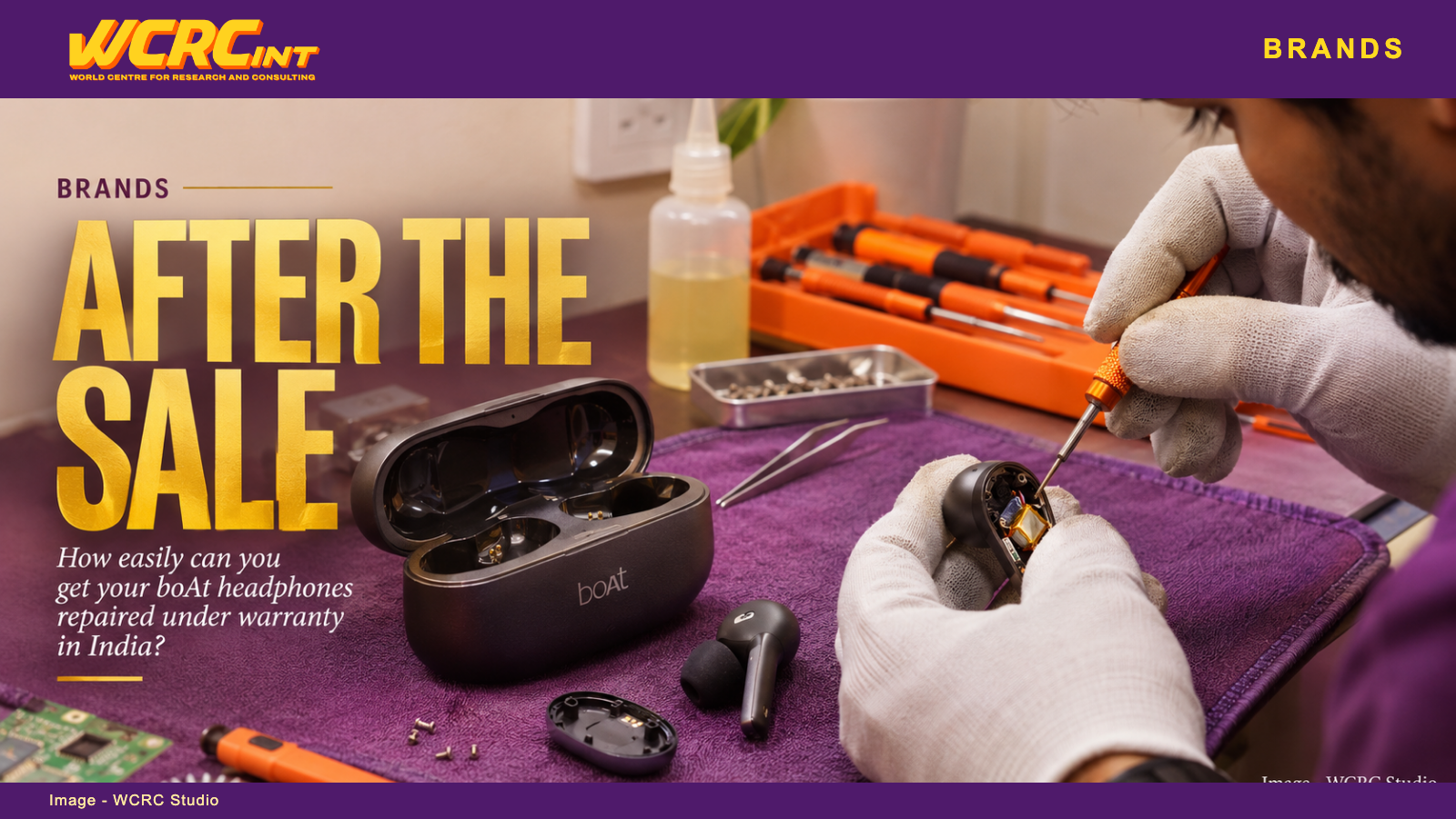
Original AI-generated editorial image. The scene illustrates the subject.
An electronics warranty becomes useful when an eligible customer can obtain service without disproportionate effort. For a brand selling affordable devices, the journey to the service counter deserves as much attention as the stated coverage period.
boAt ranks thirteenth in India’s Most Trusted D2C Brands 2026. The edition records an overall Trust Score of 81.10 and a Consumer Trust measure of 74/100. The difference between those published measures makes a focused examination of the customer relationship more useful than a claim based on rank alone. boAt profile
The warranty page checked on 19 November describes carry-in service unless otherwise specified, with coverage varying by product category. It defines a carry-in warranty as the customer taking a product to an authorised centre and collecting it after service. Its terms also exclude transport to and from the service centre from that warranty coverage. Customers need to check the terms applicable to their particular product and purchase. boAt warranty terms
Measure the journey as well as the repair
Consider the service decision faced by someone who lives far from an authorised centre. Travel consumes time as well as money. A return visit adds another cost. The price of the original device affects whether the customer thinks the process is worthwhile.
That is a hypothetical service problem, not a finding that boAt customers experience those costs at a particular rate. Establishing the scale would require service-centre data, customer accounts and geographic analysis.
A service head could start by mapping completed and abandoned claims against distance to an authorised centre. Claim records could show whether missing documentation, repeat visits or unavailable replacement stock cause delays. A short customer survey could ask what happened before someone stopped pursuing a claim.
An open service-centre listing would establish a location. It would still take operational evidence to establish that the centre can handle a particular product and complete a claim.
Trust after the first purchase
WCRC’s Consumer Trust & Sentiment lens asks the brand team to examine what a customer can reasonably expect from its promises. Applied here, it turns attention towards the clarity and accessibility of after-sales support. The India D2C edition supplies the research context. This article does not revise the brand’s assessment. India D2C methodology
A practical pilot might cover a small group of districts with differing service access. Management could compare claim completion, customer effort and cost per resolved case before testing a change such as document pre-checking or clearer appointment information.
Any improvement should be judged against comparable products and fault categories. A physical-damage claim differs from a manufacturing defect. A fast rejection of an ineligible claim also means something different from a successful repair.
The business question reaches beyond boAt. An inexpensive device can create a demanding service equation because the customer has less reason to absorb a large recovery cost. Better information about that equation would help a brand decide where service capacity, clearer instructions or a different claim route would make the greatest difference.