
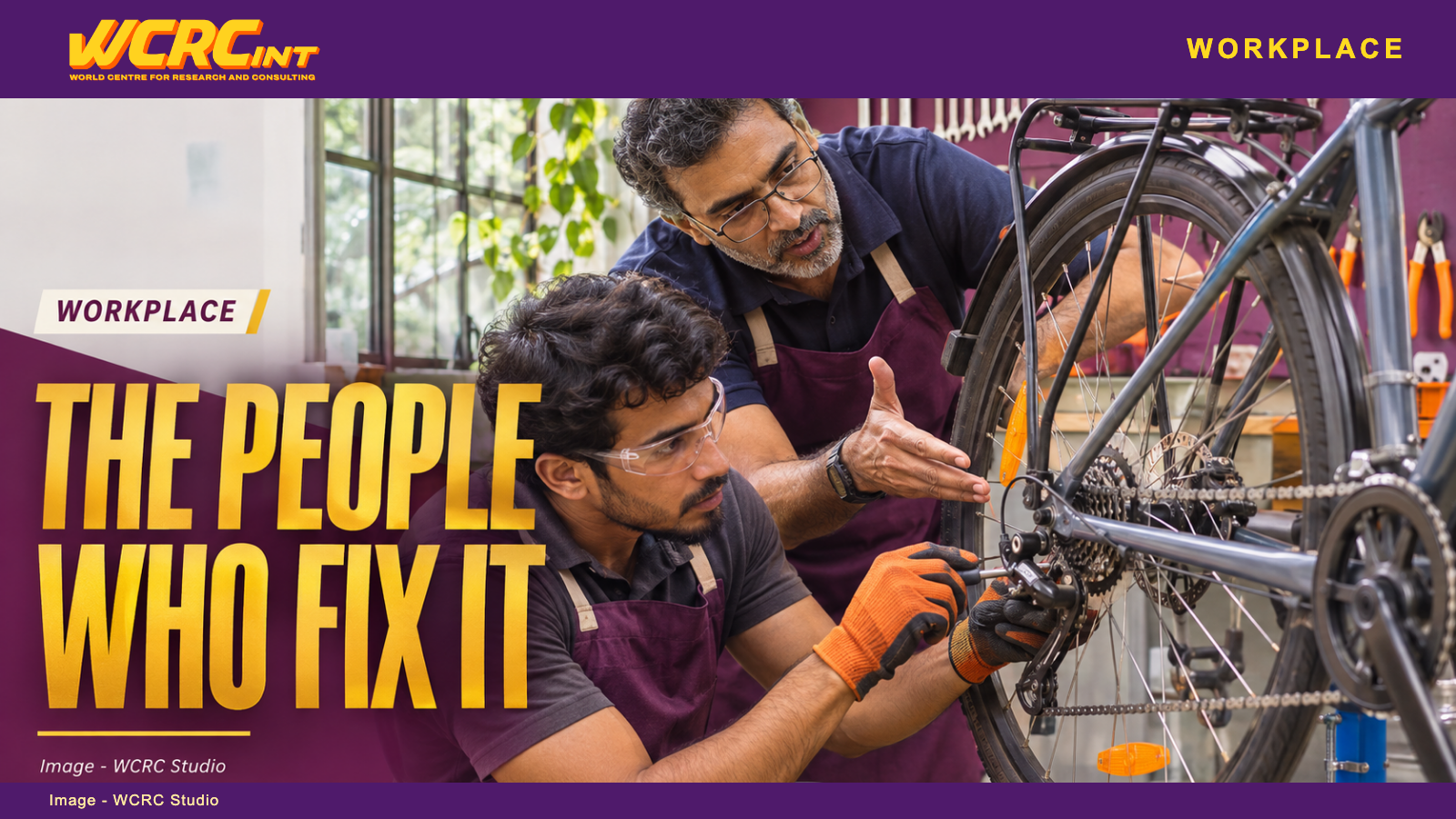
Image - WCRC Studio
Original AI-generated editorial image. The scene illustrates the subject.
A retailer offering repairs needs enough trained people, suitable parts and time to complete the work safely. Its service promise becomes credible when those resources are available together.
Decathlon ranks forty-seventh in Europe’s Most Powerful 100 Brands 2026, with a WCRC Power Score of 69.96. That edition covers brands of European origin. This article examines its UK repair offering as an operational example, with no assumption that the same service is available in India or other markets. Decathlon profile
The UK repair page checked on 19 November describes repair guidance and an appointment route. It advertises a free 15-minute diagnosis appointment to identify parts that may need replacing. A diagnosis is one stage in the process. The work and any charges depend on the repair required. UK service page
Count the time after diagnosis
A repair booking can be easy to obtain while the underlying job requires scarce expertise or a delayed part. The manager needs to understand each stage before promising a completion time.
WCRC’s proposed analysis follows one product category through the workshop. A store team could record when the customer books, when diagnosis takes place, when a suitable part is available and when the item is ready to collect. That would help identify whether a queue reflects technician capacity, supply or the complexity of the work.
The evidence needs a measure of repair quality. A repeat visit for the same fault is particularly useful to examine because an apparently fast first completion can conceal an unfinished job.
None of those possibilities is a finding about Decathlon’s actual performance. The public page describes an available service. The workshop records needed to establish outcomes were not part of this review.
Make training visible in the operating plan
Culture Crest’s Capability & Growth parameter directs attention to the skills people acquire. Performance & Enablement considers the conditions that allow them to do the work. These references guide the workshop decision. Culture Crest framework
A retail manager could choose a recurring repair and examine how technicians become competent to perform it. Training time would need a place in the staffing plan. An experienced colleague asked to teach while carrying a full repair schedule has taken on additional work.
The pilot should therefore record supervision and rework alongside completed jobs. It should also give technicians a route to decline work beyond their competence or to flag a safety concern. A high completion target should not make that conversation difficult.
Expand the category the team can support
The Product, Innovation & Delivery lens in the Europe brand methodology connects the service to the capability behind it. A retailer extending its promise beyond the initial sale takes on another relationship with the customer. Europe methodology
The practical expansion decision could be modest. Add a repair category once a team can demonstrate competent staffing, reliable parts access and a clear account of repeat faults. Use the pilot to establish realistic appointment and completion information.
For the customer, the repair counter is another encounter with the brand. For the employee, it is a job that needs the right conditions. Testing both sides would give a retailer stronger grounds for deciding which promise it can deliver next.