
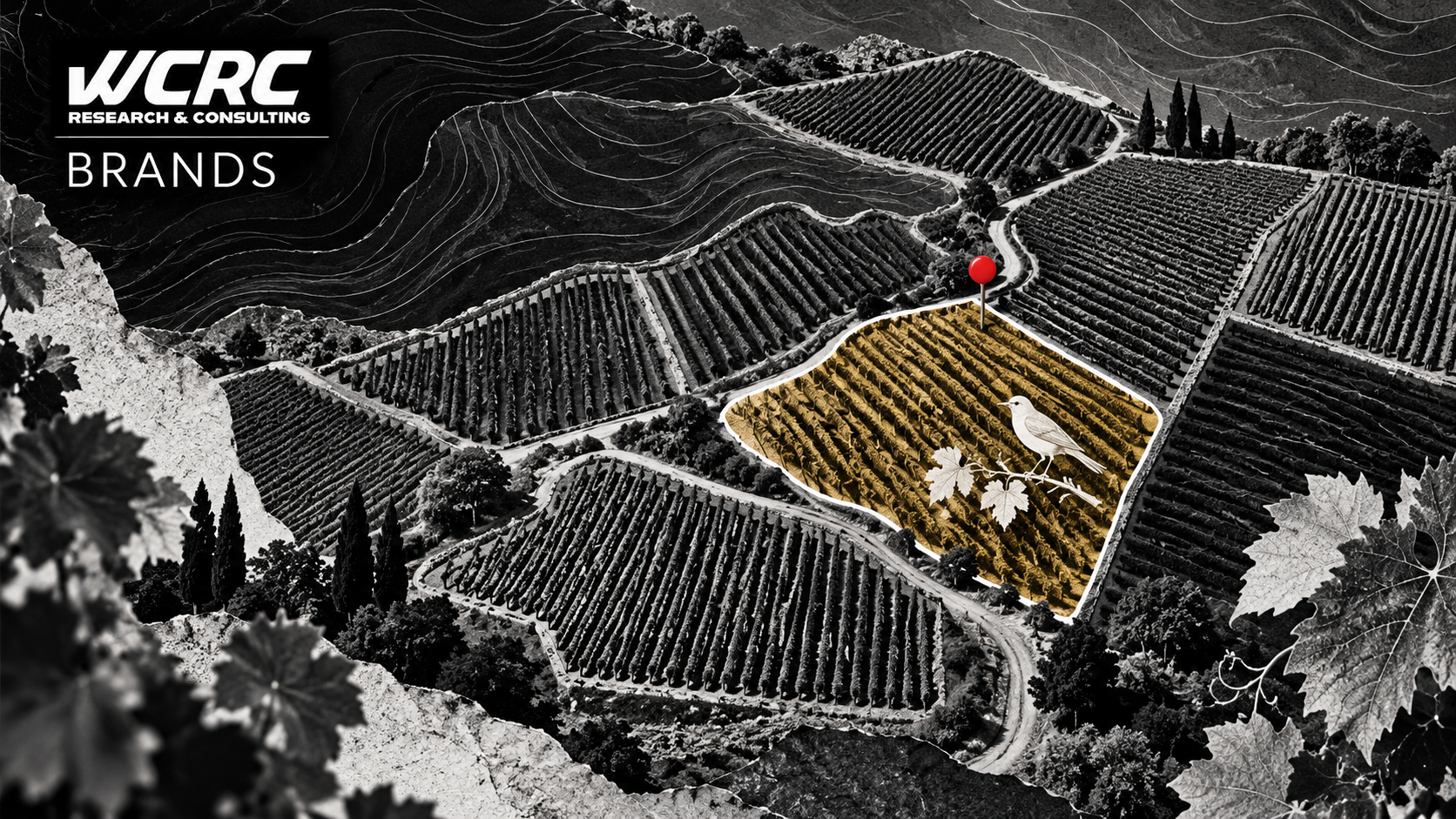
A certified site gives a business something specific to discuss. The harder communications decision is deciding where the claim stops.
Suntory announced on 30 October that its Tomi no Oka winery in Yamanashi had received Japan’s natural-site certification that day. It identifies the winery and three additional sanctuary sites in the announcement. The company describes the winery as its first production and research site to receive that certification. These are statements from Suntory’s release, rather than an independent WCRC verification of the certifier’s register.
The distinction matters because a site, a production process and a finished product are different things. A finding concerning the biodiversity of a defined area does not automatically establish the environmental performance of every product sold by its owner.
Follow the evidence to its edge
WCRC’s interpretation uses the Sustainability, Governance & ESG pillar of its Powerful Brands methodology. Applied to communication, the pillar asks whether the evidence supports the breadth of the claim that reaches the customer. No WCRC assessment or new score for Suntory is implied.
A precise statement would identify the site and the nature of the certification. A broader corporate message would need to preserve that scope when it is shortened for packaging, a retailer description or a social post. The risk lies in the distance between a carefully qualified announcement and the simplified message that travels further.
For example, evidence about habitat at a winery does not, by itself, establish a lower carbon footprint for a bottle. It also does not prove equivalent biodiversity outcomes at other production sites. Each claim needs evidence appropriate to its subject. Those are boundaries on inference, not criticisms of the reported certification.
The certificate should lead to a usable record
For a reader trying to understand the result, the most helpful supporting material would include the certifier’s entry and a clear geographic boundary. Any conditions attached to the certification should remain visible. Where continuing monitoring is required, the business should explain the relevant reporting period rather than leave readers to assume that an old observation describes every subsequent year.
Suntory’s release discusses ecological observations and management activities. Comparing the number of certified sites held by different companies would require a common register and comparison date. That comparison answers a different question from the environmental conditions at an individual site.
There is also a useful governance test inside the company. Who checks that a marketing team’s shorter claim still says the same thing as the supporting evidence? A claim register linking wording to source, scope and review date would make that responsibility easier to exercise. This is WCRC’s proposed practice, not a description of Suntory’s internal process.
The opportunity for a brand is to make a particular achievement understandable without borrowing credibility for unrelated claims. Environmental communication becomes more useful when a reader can see both what has been recognised and what remains outside that finding. The boundary is part of the information.