Define the essence
Before going global, a leader must name exactly what cannot change, or every adaptation will chip at it.
In practice: The CEO writes a one-page statement of the non-negotiable core and has the board sign off on it.
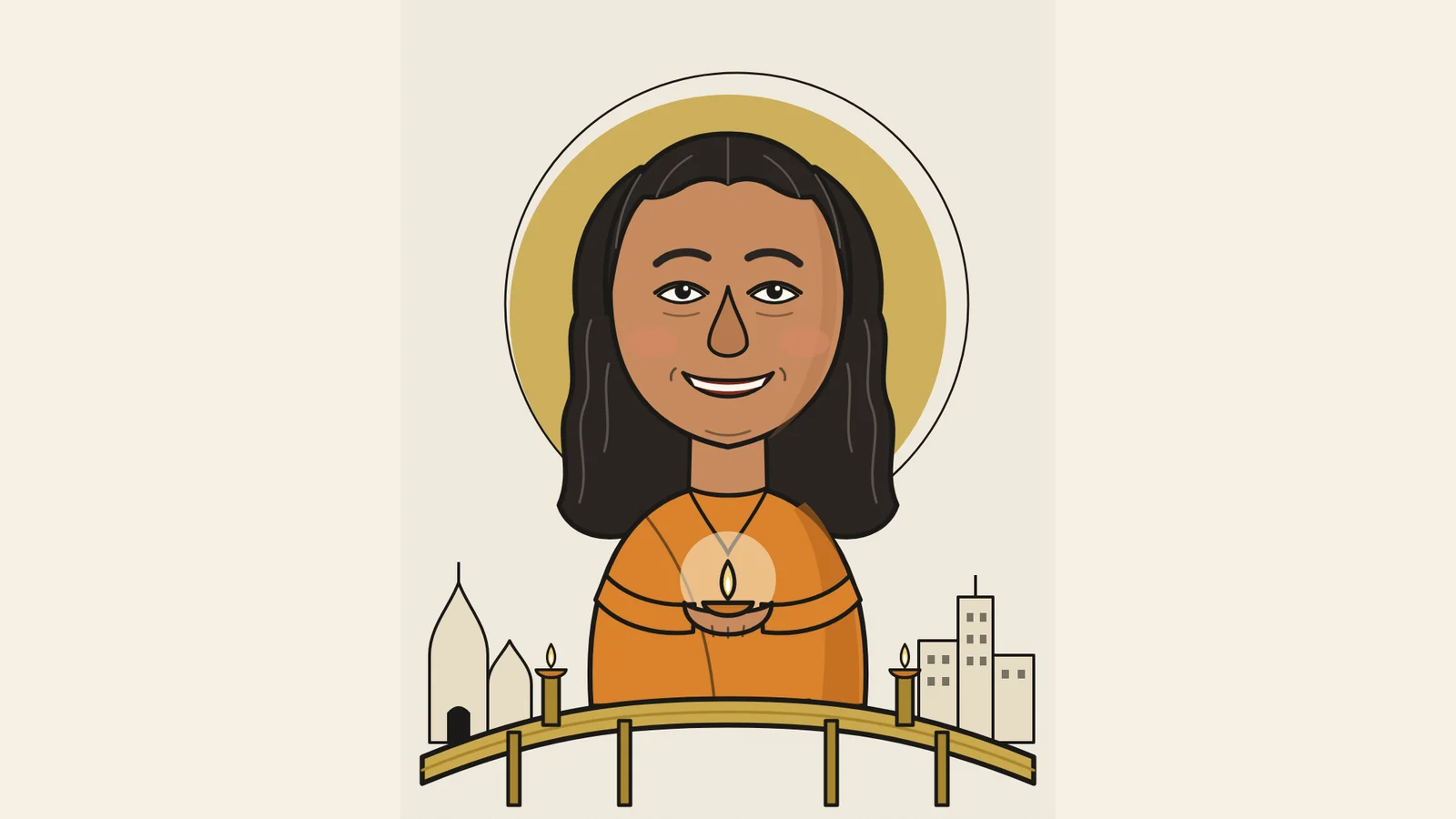
WCRC-GLC-22 — The Modern Sages
The WCRC Essence–Form Bridge
Hold the essence constant; adapt the form for each audience.
THE MODEL
A model for taking an idea, product or culture from one market to the world without losing what makes it valuable. The leader defines the essence that must never change, adapts the form (language, format, delivery) for each new audience, and builds institutions and structured learning so the essence survives scale and the founder.
Anchor teaching: Taking Kriya Yoga to the West (Babaji's charge, as devotees recount)
This is a selection of teachers linked with the Hindu tradition, not a ranking. The models offer management reflection, not religious instruction.
WCRC is not affiliated with or endorsed by any teacher or organisation discussed.
MODEL STRUCTURE
Before going global, a leader must name exactly what cannot change, or every adaptation will chip at it.
In practice: The CEO writes a one-page statement of the non-negotiable core and has the board sign off on it.
Language, format, price and delivery should change to suit each market, as Yogananda spoke to Americans in their own idiom.
In practice: The CEO gives local teams freedom over form and asks them to prove each change leaves the essence intact.
An idea outlives its founder only if institutions hold it; YSS and SRF were built to carry the work on.
In practice: The CEO invests in governance and leadership succession before scaling into a new region.
Codified, sequenced learning lets the essence reach people the founder will never meet.
In practice: The CEO funds a structured curriculum that teaches the core consistently across every market.
A global leader's capacity depends on caring for body, mind and inner life together, especially across time zones and cultures.
In practice: The CEO keeps a fixed daily routine of rest, exercise and reflection while travelling.
TEACHING AND CONTEXT
In September 1920 Paramahansa Yogananda arrived in Boston as India's delegate to the International Congress of Religious Liberals and spoke on "The Science of Religion". He presented an Indian practice in terms his American audience could take in, and the same year started Self-Realization Fellowship. Over the next decades the teaching travelled through home-study Lessons and institutions in both India (YSS, 1917) and the United States, while the method itself stayed in the hands of the organisations he founded.
"Self-realization is the knowing in body, mind, and soul that we are one with the omnipresence of God." The goal is already present, waiting to be uncovered.
Yogoda Satsanga Society of India, About page. © Self-Realization Fellowship / Yogoda Satsanga Society of IndiaUnity of true religions: the original teachings of Krishna in the Gita and of Christ in the Gospels point to the same truth, experienced through meditation.
YSS About; Self-Realization FellowshipBalanced living: care for body, mind and soul together, with right diet, exercise, positive thinking and daily meditation.
YSS About"My body shall pass but my work shall go on."
yogananda.org, A Beloved World Teacher. © Self-Realization Fellowship / Yogoda Satsanga Society of IndiaOPERATING MODEL
BENEFIT MODEL
The leader gains a clear test for every adaptation question: does this change the form, or the essence?
Local teams get real freedom to adapt, within a core they understand and can defend.
Customers in each market receive something that speaks their language yet keeps the quality that made it worth having.
Investors back global expansion that protects the core asset instead of eroding it market by market.
Ideas and products from India reach the world in forms people can use, with their original value intact.
WCRC MODEL PARAMETERS
The scores describe this model's emphasis on each parameter. They are not scores for a person or organisation.
Vision Quotient3 / 5
Impact Index5 / 5
Innovation Score4 / 5
People Leadership3 / 5
Stakeholder Trust4 / 5
Resilience Factor2 / 5
Global Mindset5 / 5
THE AI AGE
Indian companies going global and AI localising everything both turn on the same question: what is essence and what is form? Generative AI is now used in at least one business function at 70% of organisations [3], and it can translate and reformat almost anything instantly, which makes it easy to change form and lose essence by accident. Trust across cultures is hard won: Edelman's 2026 Barometer reports that 70% are unwilling or hesitant to trust someone with a different cultural background [1]. Codifying the core deliberately, as Yogananda's Lessons did, is what lets it survive translation [2].
EXECUTION
Write a one-page draft of what must never change about your offering, and send it to the board for challenge before any new-market plan goes further.
Write down what must never change and find where current markets have drifted from it.
Deliverable: A board-signed core statement and an essence audit for every current market.
Gate: The core statement is signed off by the board and an essence fidelity baseline is recorded for every market.
Prove in one market that local teams can change the form freely while the essence holds.
Deliverable: A pilot market decision log, a first core curriculum and a panel fidelity score for the pilot.
Gate: The cross-market panel finds the essence intact in the pilot's offerings, and local adaptation share is recorded from the decision log.
Make the split the normal way every market decision is proposed, approved and taught.
Deliverable: Revised approval templates, an expansion readiness checklist and curriculum completion records by market.
Gate: Every new market proposal carries an essence-form statement and a readiness check, and structured learning reach is tracked in each market.
Keep the essence alive as markets multiply and the founding team steps back.
Deliverable: An annual essence review for the board covering fidelity, adaptation, learning reach and trust by market.
Gate: The board has reviewed the core statement and institution drift within the year, and no market opens without curriculum and governance in place.
sponsor: The CEO, since only the person at the top can say what the essence is and hold it against commercial pressure in every market.
lead: The head of strategy, who runs the essence audit, the cross-market panel and the expansion readiness checks.
forum: Market essence reviews happen every half-year in the leadership meeting, and the core statement is reviewed annually by the board.
decision_rights: Market heads decide changes to form alone within the core guidelines; any change that touches the written essence goes to the CEO and then the board.
Weekly: Market teams log each product, content and service decision with its essence-form split.
Monthly: The CEO reviews a sample of adapted offerings from different markets and asks which parts are essence and which are form.
Quarterly: The cross-market panel scores offerings in each market against the core statement.
Annually: The board reviews the core statement, institution drift and readiness before approving new markets.
The founders write the core statement themselves and adapt form for their second market by hand. The curriculum can be a short written guide the founder teaches in person.
A small strategy team runs the essence audit and keeps market decision logs, and new market leaders complete the curriculum before launch. Governance and successors are named before each new region opens.
The board owns the core statement and reviews it each year, with a standing cross-market panel scoring fidelity. Expansion committees treat institution readiness and curriculum reach as conditions of approval.
MEASUREMENT AND LIMITS
Periodic review of offerings in each market against the written core statement, scored by a cross-market panel.
Share of product, content and service decisions taken by local teams within the core guidelines, from decision logs.
Number of staff and partners in each market who have completed the core curriculum.
Customer trust scores by market, compared with the home market, from regular surveys.
RESEARCH SOURCES
The WCRC Guru Management Codex and its 27 models are proprietary WCRC models. © WCRC. All rights reserved.