
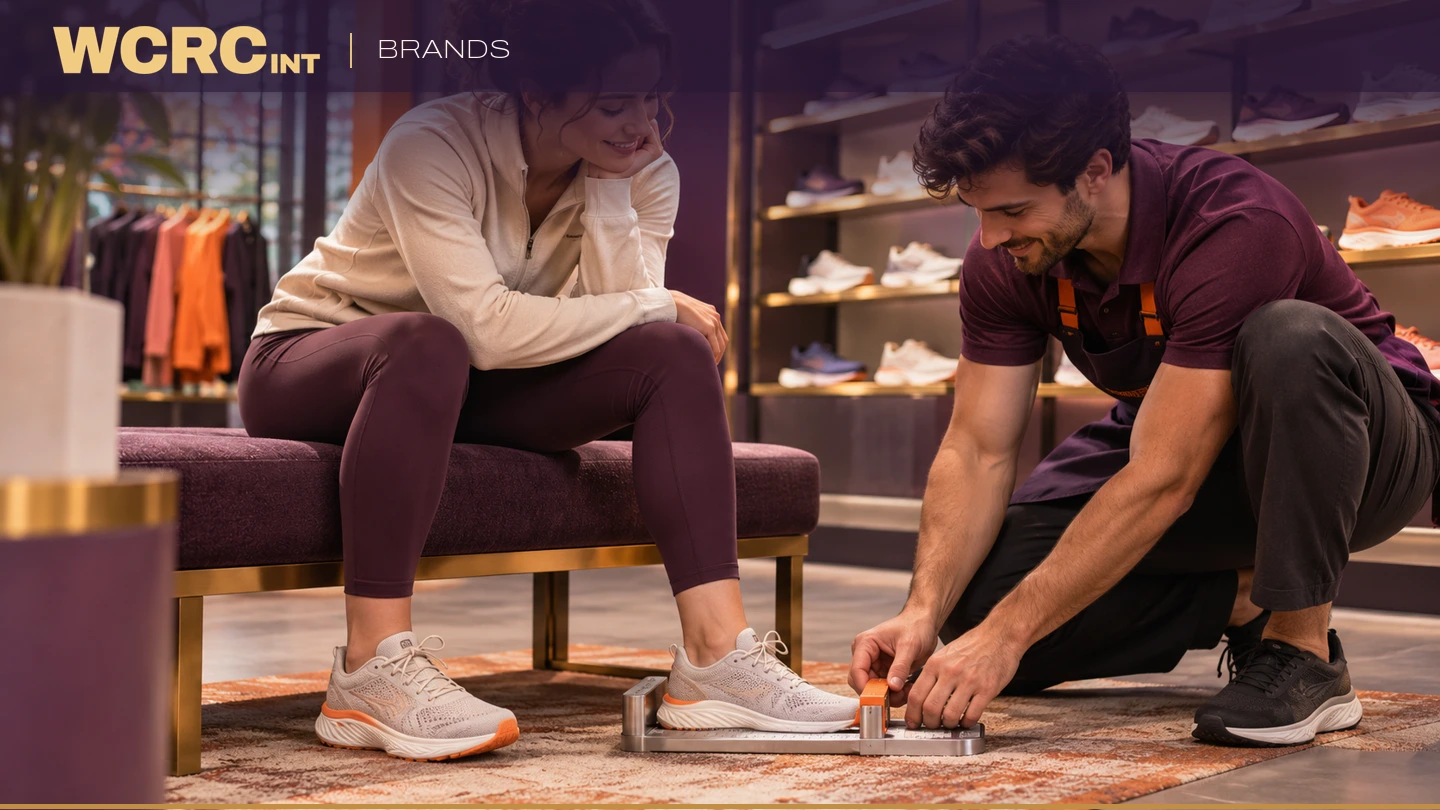
Image - WCRC Studio · AI-generated editorial illustration
Brands should keep product information and the customer handoff consistent across channels. A retailer can offer a different fitting service or returns window. A customer should be able to tell who will handle an exchange and whether the shoe in a second shop is the exact model they tried in the first.
Nike ranks 42nd with 76.58 in WCRC’s World’s Most Powerful 100 Brands 2026. Its Form 10-K for the year ended 31 May 2026 reported NIKE Brand wholesale revenue of $27.5 billion, up from $25.9 billion a year earlier. NIKE Direct revenue was $17.7 billion, down from $18.8 billion. These sales figures show why the partner channel is too large to treat as incidental. They do not show which channel gave customers better advice or why an individual runner bought where they did. Nike profile · Nike FY2026 Form 10-K
Compare one shoe from first search to exchange
The Powerful Brands delivery lens directs attention to the points at which the owner of the experience changes. Pick one running-shoe model with the same SKU and width across a direct store and comparable retail partners. Start with the size advice and stock indication. Follow through to the receipt, exchange terms and the instructions a customer receives when the preferred size is out of stock. Repeat in the same market and time period so differences in products or promotions do not swamp the comparison. Powerful Brands methodology
A channel team could give partners a single version of the size and product notes and run the same comparison again. Measure incorrect recommendations and cases referred to the wrong team, alongside conversion. A sale can go through even if the reader will later spend an evening trying to work out how to return the shoes. Those repeatable frictions are what the team should fix first.