Name the one refuge
Choose the single non-negotiable purpose that decides everything else, stated in one sentence anyone can repeat.
In practice: The CEO writes the company's one non-negotiable commitment and tests every major decision against it.

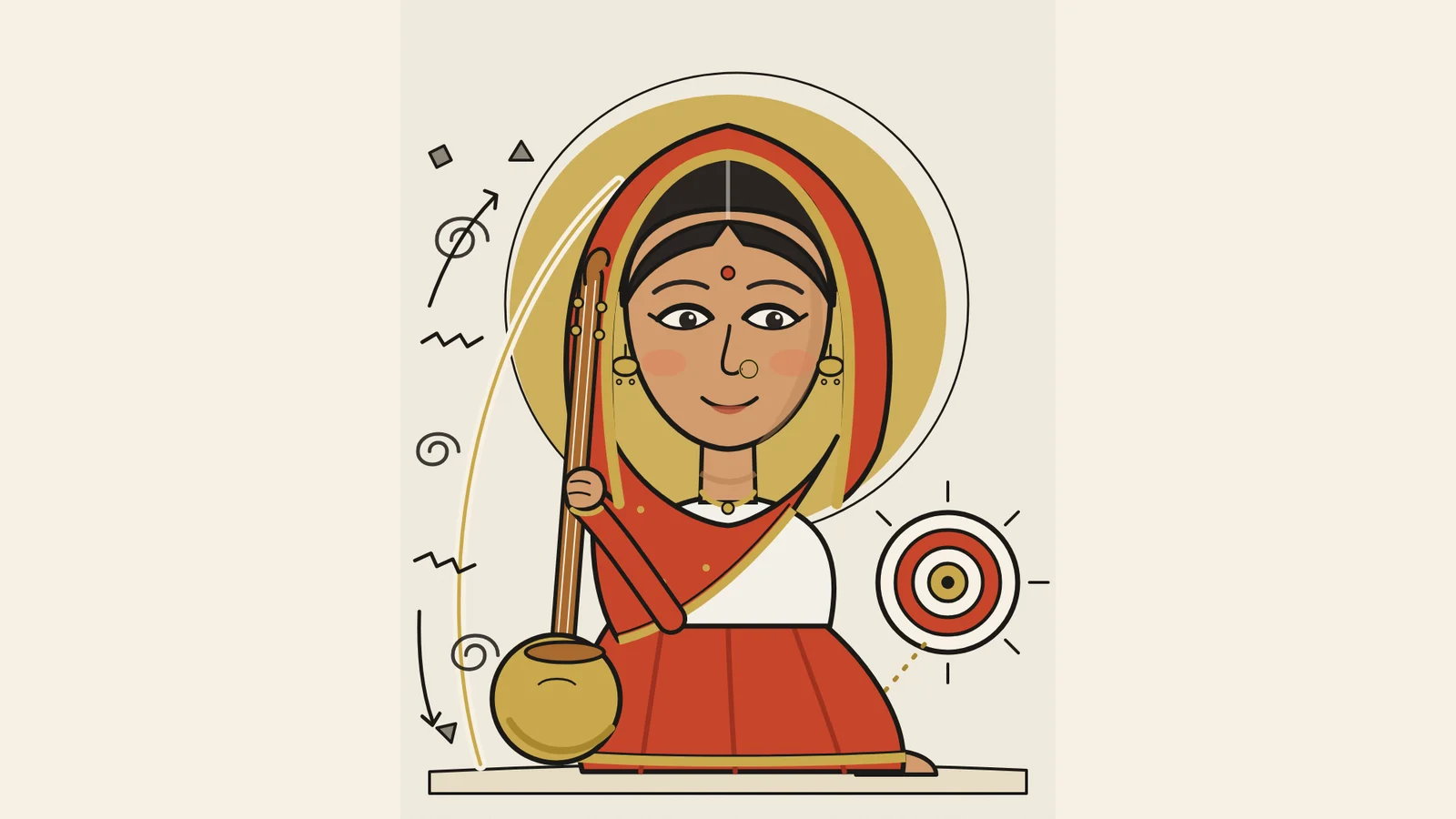
WCRC-GLC-09 — The Bhakti Saints
The WCRC Single-Refuge Focus Model
One refuge, held with courage and without hatred.
THE MODEL
The Single-Refuge Focus Model asks a leader to name the one commitment the organisation will not divide, and to protect it by saying no to what competes with it. The commitment is held with quiet courage under pressure, without turning opponents into enemies, and is expressed in the everyday words people actually use.
Anchor teaching: मेरे तो गिरधर गोपाल, दूसरो न कोई (Mine is Giridhar Gopal, and no one else)
This is a selection of teachers linked with the Hindu tradition, not a ranking. The models offer management reflection, not religious instruction.
WCRC is not affiliated with or endorsed by any teacher or organisation discussed.
MODEL STRUCTURE
Choose the single non-negotiable purpose that decides everything else, stated in one sentence anyone can repeat.
In practice: The CEO writes the company's one non-negotiable commitment and tests every major decision against it.
An undivided focus needs visible refusals; what is declined shows what the refuge really is.
In practice: For each new initiative approved, the leadership team retires or declines one that does not serve the refuge.
Hold the commitment when powerful people push for a detour, quietly and without drama.
In practice: When a board member, major customer or investor presses for a detour, the CEO explains the refusal openly and in person.
Answer opposition without bitterness, so the door stays open and the commitment stays clean.
In practice: The leader speaks of critics with respect in public and keeps working relationships with them.
Say the purpose in homely words and images so people feel it close to their own work.
In practice: The purpose is explained to frontline teams with no jargon, using images from their daily tasks.
TEACHING AND CONTEXT
Tradition holds that after she was widowed, around 1521, Mirabai faced sustained pressure at the Mewar court to give up her devotion, and songs attributed to her allude to attempts on her life. She kept her days in her private temple, singing and receiving sadhus and pilgrims, and the songs carry no hatred for those who opposed her. When she left in the later 1530s, for Merta and then pilgrimage, she took the same single devotion with her.
One refuge: her signature line declares Giridhar Gopal her only one; devotion means not dividing the heart.
Pada opening, cited by Hinduism Today (as given in brief)Courage in devotion: she held to her path against family, caste and social pressure, without hatred for her persecutors.
Britannica (as given in brief)Everyday language: homely images such as the dancer's anklets, the jewel and the bazaar let ordinary people feel God close.
Britannica; Poetry Foundation (as given in brief)OPERATING MODEL
BENEFIT MODEL
The leader gains a simple test for hard choices and the steadiness that comes from knowing what will not be traded.
Staff stop being pulled between competing priorities and can see why some work stops and other work continues.
Customers get a company that is clearly good at one thing and does not drift with each new trend.
Capital goes to a focused set of bets with a clear rationale, and refusals are explained in advance.
Disagreement is handled without hostility, which shows that firm conviction and civility can sit together.
WCRC MODEL PARAMETERS
The scores describe this model's emphasis on each parameter. They are not scores for a person or organisation.
Vision Quotient5 / 5
Impact Index3 / 5
Innovation Score2 / 5
People Leadership3 / 5
Stakeholder Trust4 / 5
Resilience Factor5 / 5
Global Mindset1 / 5
THE AI AGE
Nearly nine in ten organisations now report regular AI use in at least one function, yet only 6 percent qualify as high performers in McKinsey's 2026 survey [1]. Pilots multiply faster than any leadership team can absorb them, and only 26% of AI users say their leadership is clearly and consistently aligned on AI [2]. With options effectively unlimited, focus becomes a strategic decision. A CEO who names one refuge and refuses the rest gives the organisation a way to choose which AI work matters.
EXECUTION
On Monday, write the company's non-negotiable commitment in a single sentence and test this week's biggest decision against it.
Name the one refuge and see how far current resources serve it.
Deliverable: A written refuge statement and a portfolio map showing resource concentration.
Gate: Baseline recorded for every KPI, the board has tested the refuge against the leader's personal preference, and the leadership team of one business has agreed to pilot the starts-and-stops rule.
Prove that the starts-and-stops rule concentrates resources without shutting out advice or governance.
Deliverable: A starts-and-stops log with the refuge test for each entry.
Gate: Every new initiative in the pilot business was matched by a stop or a decline, each is recorded with its refuge test, and the board has heard the reasoning for every detour refused.
Embed the refuge test in planning and capital allocation.
Deliverable: A refuge test in the planning and capital process, and frontline explanation materials.
Gate: Every capital request in the period carried a refuge test, and resource concentration has risen against baseline.
Hold the refuge with courage while revisiting it when the world changes.
Deliverable: An annual refuge review by the board.
Gate: The board's annual review has tested the refuge against market changes and reaffirmed or revised it on the record.
sponsor: The board chair with the CEO, because the refuge must belong to the company and not to one person's preference.
lead: The CEO office with the CFO, owning the portfolio map and the starts-and-stops log.
forum: Monthly in the leadership meeting for starts and stops; quarterly at the board for concentration and consistency; annually at the board for the refuge itself.
decision_rights: The lead can decline any new initiative that fails the refuge test; stopping a live business line and any change to the refuge go to the CEO and the board.
Weekly: The leadership team checks new requests against the refuge before they reach the agenda.
Monthly: A starts-and-stops review that pairs each approved start with a stop or decline.
Quarterly: Resource concentration and decision consistency are reported to the board, and the CEO meets leading critics.
Annually: The board revisits the refuge itself against outside evidence.
The founder writes the refuge in one line and turns down customers or projects that pull away from it. Co-founders and early investors test whether it is the company's purpose or the founder's taste.
Each new initiative is paired with a stop in the monthly leadership review, and the CFO tracks where resources go. Managers learn to decline requests by pointing to the refuge.
The refuge test is attached to capital requests and board papers across divisions. The board owns the refuge, revisits it each year and backs the CEO in refusing detours that do not serve it.
MEASUREMENT AND LIMITS
Share of capital and headcount allocated to initiatives that directly serve the named refuge, from the annual portfolio review.
Number of initiatives retired or declined against the number approved each quarter.
Sample major decisions each quarter and have an independent reviewer judge whether each was tested against the refuge statement.
Survey staff on whether leadership is clearly and consistently aligned on the company's main priority.
RESEARCH SOURCES
The WCRC Guru Management Codex and its 27 models are proprietary WCRC models. © WCRC. All rights reserved.