
A parent can judge whether a child likes a trial lesson in an afternoon. It takes longer to see whether the activity fits the child’s needs and whether the feedback helps the family decide what to do next.
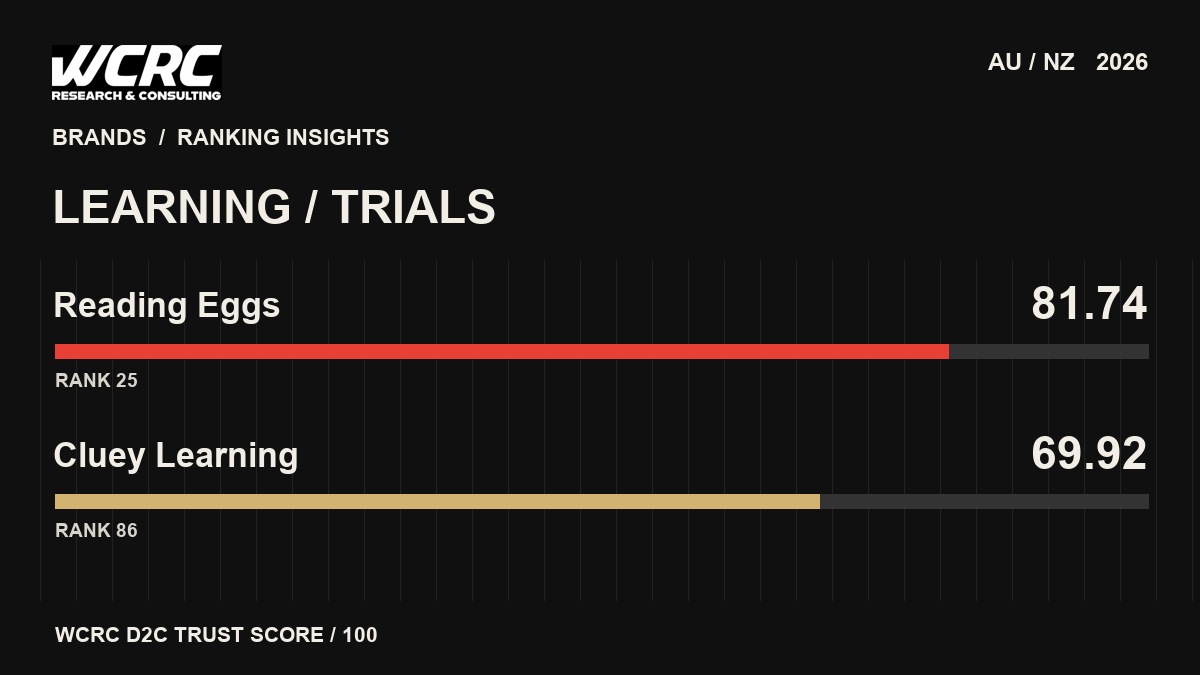
In WCRC’s Australia & New Zealand Trusted D2C Brands 2026 edition, Reading Eggs ranked #25 with a D2C Trust Score of 81.74/100 and Cluey Learning ranked #86 with a D2C Trust Score of 69.92/100.
Reading Eggs and Cluey Learning give WCRC two different formats to consider: self-paced software and tutoring. Through Product, Innovation & Delivery, the fair question is whether each delivers what a parent can reasonably expect from its own format. A self-paced service could show which skills a child has attempted and what to practise next. Tutoring could make the session plan and feedback clear enough to discuss after the lesson.
A trial comparison should record what the parent sees before renewal and what happens when they cancel. The published score gap cannot establish a difference in learning outcomes. That would require comparable learners, measures and follow-up.
Reading Eggs scorecard · Cluey Learning scorecard · 2026 edition · WCRC D2C Trust Score methodology