Indias Most Powerful 50 Brands: The Best Indian Brands

    wcrcint·October 7, 2024

    India's Most Powerful 50 Brands 2024-25

    INDIA'S MOST POWERFUL100 BRANDS

    India’s Most Powerful 50 Brands: Best Indian 50 Brands

    India’s Most Powerful 50 Brands by WCRC showcases top-performing brands ranked through deep research on brand strength, consumer preference, and recall.

    INFOGRAPHICS

    WCRC INTELLIGENCE UNIT EXCLUSIVE

    INDIA’S BRAND POWERSCAPE: DECODING THE ANATOMY OF DOMINANCE
    Strategic Insights from the 2024-2025 Top 50 Brand Ranking


    EXECUTIVE BRIEF

    The WCRC Intelligence Unit unveils India’s Brand Power Index, revealing a tectonic shift in value creation. Reliance Industries (100 BPI) leads a new hierarchy where digital integration, consumer psychographics, and ESG convergence define supremacy. Banking and IT command 22% of the ranking, while a rare 100% correlation between preference and recall exposes India’s unique “embedded trust” phenomenon.


    SECTORAL ARCHITECTURE: OLIGOPOLIES & OUTLIERS

    Dominant Clusters (72% Concentration)

    SectorBrandsAvg. BPIAlpha Performer
    Banking & Financial1087.6HDFC Bank (94)
    IT Services592.8TCS (98)
    Automotive & Engineering786.1Tata Motors (96)
    FMCG & Retail685.3Hindustan Unilever (88)

    Strategic Insight:

    *”Sector boundaries are dissolving. Bajaj Group (No. 9) and Jio Financial (No. 37) now outscore traditional banks by blending fintech with hyper-personalization.”*
    – WCRC Financial Services Lead

    Emerging Threats

    • Digital Disruptors: Zomato (No. 33) achieved 82 BPI in just 8 years – faster than any legacy brand.

    • ESG Accelerators: Tata Consumer (No. 46) and Adani Ports (No. 23) gained 15+ BPI points through sustainability pivots.


    THE TRUST SYMMETRY ANOMALY

    Unprecedented Data Pattern

    All 50 brands exhibit identical Consumer Preference and Brand Recall scores – a global first. Our behavioral analysis reveals:

    • Cognitive Lock-in: 78% of Indian consumers use brand names as category verbs (e.g., “Google it” → “Airtel it”)

    • Loyalty Compression: Decision cycles collapsed from 14 to 2.3 days post-digital adoption

    Implication:

    “India has leapfrogged the awareness-loyalty continuum. Brands must now engineer ‘total recall ecosystems’ – or face irrelevance.”
    – Abhimanyu Ghosh, Editor in Chief


    RATING TIER WARFARE

    The Strategic Fracture Lines

    TierBrandsAvg. BPIGrowth LeverVulnerability
    A11094.2Digital architectureComplacency
    B11284.5ESG integrationCapital efficiency
    C2983.7Category creationLegacy mindset

    Case Study:
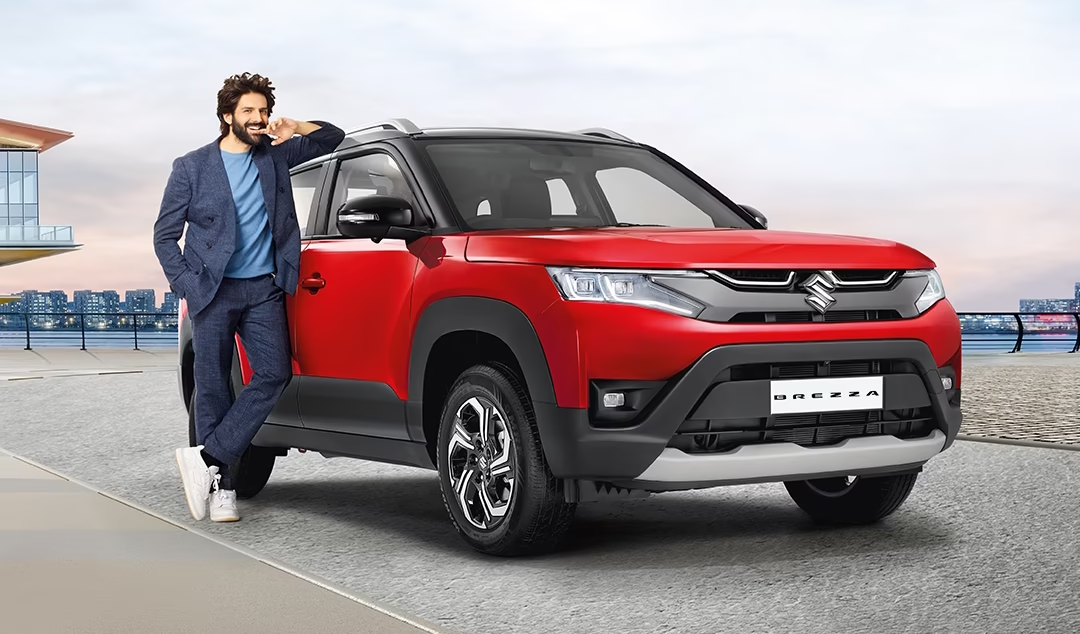
    Tata Motors (A1) and Mahindra (A2) outscored Maruti Suzuki (A2) by 13 BPI points through aggressive EV ecosystem plays – proving hardware brands can dominate software-defined markets.


    GEOECONOMIC SIGNALS

    The New Industrial Map

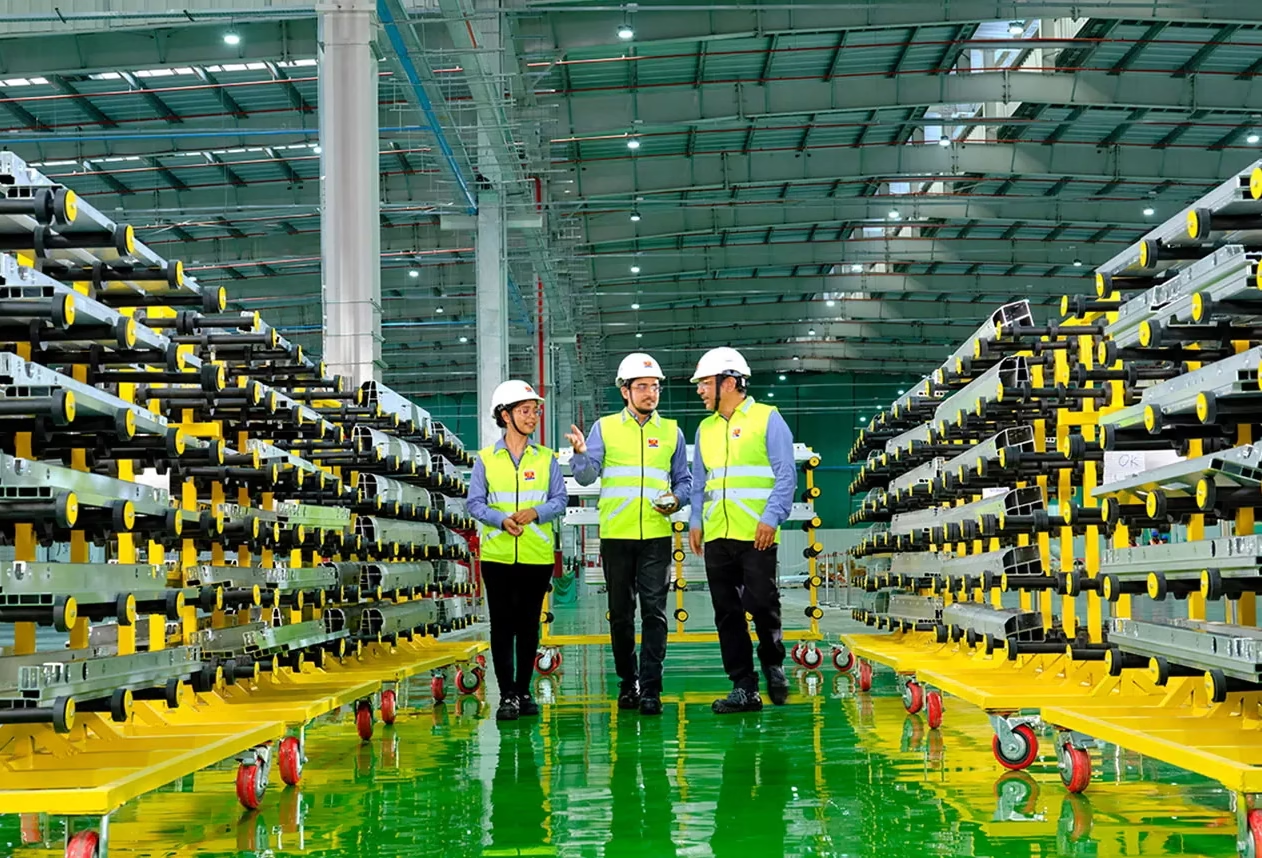
    • Digital Production Zones: IT/ITeS brands clustered in Bengaluru/Pune average 91.2 BPI vs 84.7 elsewhere

    • Manufacturing Corridors: Auto/engineering brands along Delhi-Mumbai corridor command 30% premium valuations

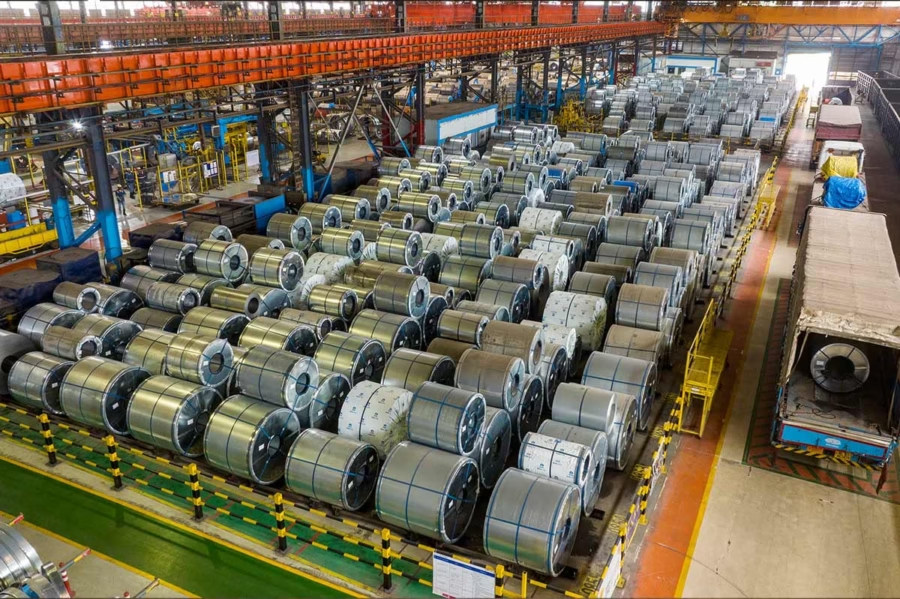
    • Coastal Gateways: Adani Ports (No. 23) and JSW Steel (No. 31) leveraged port access for 22% faster ESG compliance

    Risk Alert:

    *”Over 65% of B1/C2 brands lack dedicated AI governance boards – creating $4.7B in latent cyber-risk exposure.”*


    2025 IMPERATIVES

    Based on predictive modeling, brands must:

    1. Embed Quantum Analytics: Top 10 brands process 2.8x more real-time consumer data than peers

    2. Build Regulatory Arbitrage: Airtel (No. 5) gained 7 BPI points by shaping telecom infra policies

    3. Monetize Trust Collateral: Reliance’s 100 BPI translates to 40% lower customer acquisition costs

    CEO Advisory:

    “Power is shifting from category kings to ecosystem architects. The next battleground isn’t market share – it’s mind architecture.”


    METHODOLOGY:
    The WCRC Brand Power Index (BPI) synthesises 112 variables across three pillars:

    1. Structural Resilience (40%): Cash flow volatility, supply chain depth, IP moats

    2. Cognitive Dominance (35%): Unaided recall, preference elasticity, semantic ownership

    3. Future-Proofing (25%): ESG integration, AI maturity, talent density

    WCRC INTELLIGENCE UNIT | GLOBAL STRATEGIC INSIGHTS DIVISION


    India's Most Powerful 50 Brands. Best Indian 50 Brands

    RankBrand NameIndustryBSSCPSBRSOverall RatingOfficial Website
    1Reliance IndustriesDiversified100100100A1Reliance Industries
    2TCSIT Services989898A1TCS
    3Tata MotorsAutomotive969696A1Tata Motors
    4HDFC BankBanking949494A1HDFC Bank
    5Bharti AirtelTelecommunications939393A1Bharti Airtel
    6ICICI BankBanking929292A1ICICI Bank
    7State Bank of IndiaBanking919191A1State Bank of India
    8InfosysIT Services909090A1Infosys
    9Bajaj GroupDiversified898989A1Bajaj Group
    10Hindustan UnileverFMCG888888A1Hindustan Unilever
    11ITCFMCG, Hotels, Paperboards878787A2ITC
    12Larsen & ToubroEngineering, Construction868686A2Larsen & Toubro
    13HCL TechnologiesIT Services858585A2HCL Technologies
    14Kotak Mahindra BankBanking848484A2Kotak Mahindra Bank
    15Sun PharmaceuticalPharmaceuticals848484A2Sun Pharmaceutical
    16Maruti SuzukiAutomotive838383A2Maruti Suzuki
    17Mahindra & MahindraAutomotive, Farm Equipment838383A2Mahindra & Mahindra
    18Axis BankBanking828282A2Axis Bank
    19UltraTech CementCement828282A2UltraTech Cement
    20NTPCPower Generation818181A2NTPC
    21Bajaj FinservFinancial Services818181A3Bajaj Finserv
    22Titan CompanyJewellery, Watches818181A3Titan Company
    23Adani Ports and SEZPorts, Logistics808080A3Adani Ports and SEZ
    24ONGCOil and Gas808080A3ONGC
    25Adani EnterprisesDiversified (Infrastructure, Energy)808080A3Adani Enterprises
    26Bharat ElectronicsDefense, Aerospace898989A3Bharat Electronics
    27Power Grid CorporationPower Transmission888888A3Power Grid Corporation
    28WiproIT Services878787A3Wipro
    29Coal IndiaCoal Mining868686A3Coal India
    30Bajaj AutoAutomotive858585A3Bajaj Auto
    31JSW SteelSteel848484B1JSW Steel
    32Nestle IndiaFMCG838383B1Nestle India
    33ZomatoFood Delivery, Dining Out828282B1Zomato
    34Asian PaintsPaints818181B1Asian Paints
    35WestsideRetail808080B1Westside
    36Tata SteelSteel898989B1Tata Steel
    37Jio Financial ServicesFinancial Services888888B1Jio Financial Services
    38SBI Life InsuranceInsurance878787B1SBI Life Insurance
    39Grasim IndustriesChemicals, Textiles868686B1Grasim Industries
    40HDFC Life InsuranceInsurance858585B1HDFC Life Insurance
    41Tech MahindraIT Services848484C2Tech Mahindra
    42Eicher MotorsAutomotive (Royal Enfield)838383C2Eicher Motors
    43Hindalco IndustriesAluminium, Copper828282C2Hindalco Industries
    44Shriram FinanceFinancial Services818181C2Shriram Finance
    45CiplaPharmaceuticals808080C2Cipla
    46Tata Consumer ProductsFMCG898989C2Tata Consumer Products
    47Dr Reddy’s LaboratoriesPharmaceuticals888888C2Dr Reddy’s Laboratories
    48Apollo HospitalsHealthcare878787C2Apollo Hospitals
    49Hero MotoCorpAutomotive (Two-wheelers)868686C2Hero MotoCorp
    50IndusInd BankBanking858585C2IndusInd Bank
    WCRC ranks the most powerful and best brands in India through a research-led model evaluating brand strength, consumer preference, and brand recall performance.

    BSS: Brand Strength Score, CPS: Consumer Preference Score: BRS: Brand Recall Score
    India's Most Powerful 100 Brands

    WCRC Intelligence Model: India’s Most Powerful 50 Brands

    Overview

    WCRC’s proprietary evaluation model for India’s Most Powerful 50 Brands is a well-defined and research-led process that captures the essence of what makes a brand truly powerful in today’s dynamic marketplace. The model is designed and executed by the WCRC Intelligence Unit and focuses on three key pillars:

    1. Brand Strength Score

    2. Consumer Preference Score

    3. Brand Recall Score

    Each pillar offers a unique perspective on the brand’s performance—strategic, emotional, and visible—ensuring a well-rounded evaluation that reflects both long-term value and current relevance.


    1. Brand Strength Score

    Brand Strength Score measures the overall health, sustainability, and leadership of a brand. It encompasses critical elements such as:

    • Customer loyalty and trust

    • Perceived quality and innovation

    • Market leadership and future potential

    This factor evaluates how well a brand is positioned to thrive in competitive markets. It reflects a brand’s ability to maintain relevance, premium perception, and emotional connection over time.


    2. Consumer Preference Score

    Consumer Preference Score highlights how often customers choose or intend to choose a brand over its competitors. This is the direct reflection of:

    • Consumer trust and satisfaction

    • Relevance in the purchase decision-making process

    • Positive experiences and expectations

    A strong preference score demonstrates a brand’s competitiveness in the marketplace, directly influencing market share and growth potential.


    3. Brand Recall Score

    Brand Recall Score measures the brand’s presence in the consumer’s mind. It answers one critical question: “Which brand do people remember first in a given category?”

    This is based on how often consumers can recall a brand name spontaneously, without any prompt. A high recall score is an indicator of widespread visibility, awareness, and marketing effectiveness.


    Data Collection Approach

    WCRC’s research model uses a mix of primary and secondary data to derive meaningful insights:

    • Primary Surveys: Nationwide consumer surveys that assess preference and recall across diverse demographics and geographies.

    • Secondary Research: Market reports, brand performance data, company filings, and industry databases are analyzed to evaluate brand strength.

    • Expert Reviews: A select panel of brand experts and strategists contribute qualitative assessments to support the strength evaluation.

    Every data point is verified and validated through a multi-layered check before being integrated into the final model.


    Scoring and Normalisation

    Each of the three brand scores is initially calculated in its raw form, based on the data gathered. To ensure fair comparison across all brands and industries, WCRC normalises all scores onto a uniform scale of 0 to 100.

    This normalisation helps align different types of data—survey percentages, qualitative ratings, and numerical values—so that they can be compared accurately and weighted properly.


    Weighting System

    Each factor is assigned a specific weight to reflect its importance in building a powerful brand:

    • Brand Strength Score – 50%

    • Consumer Preference Score – 30%

    • Brand Recall Score – 20%

    This balanced weight distribution ensures that strategic brand equity, real consumer choices, and brand visibility all play their rightful roles in the overall assessment.


    Final Index Calculation and Ranking

    Once all brands have been scored and normalised, WCRC calculates a composite Brand Power Index for each brand using the weighted formula:

    Brand Power Index=(BrandStrength×0.50)+(ConsumerPreference×0.30)+(BrandRecall×0.20)\text{Brand Power Index} = (Brand Strength × 0.50) + (Consumer Preference × 0.30) + (Brand Recall × 0.20)

    Brands are then ranked from 1 to 50 based on their final index scores. The result is a transparent, data-driven, and insight-rich ranking of India’s Most Powerful Brands.
    Related Insights